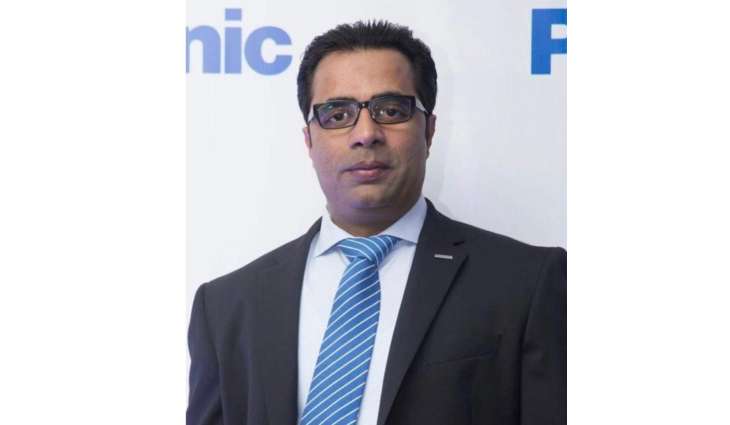
Over more than twenty-three years in the global consumer electronics industry, he rose from a planning executive covering East African markets to General Manager and Head of Department for Panasonic’s Middle East and Africa Division
LAHORE: (UrduPoint/Pakistan Point News-July 23rd, 2026) As manufacturers confront increasingly volatile demand, fragmented distribution networks, and rapidly changing customer behavior, many long-standing assumptions about commercial operations are being challenged.
Few executives have spent as much of their careers navigating these realities as Kamran Pitafi.
Over more than twenty-three years in the global consumer electronics industry, he rose from a planning executive covering East African markets to General Manager and Head of Department for Panasonic’s middle East and Africa Division, holding full profit and loss responsibility for multi-country operations with annual revenue portfolios exceeding $45 million. His operational experience ultimately led to the publication of The Manufacturing-to-Market Framework (M2M): Connecting Production, Distribution, and Commercial Growth in 2024, documenting a structured methodology for aligning manufacturing, distribution, and commercial execution across complex international markets.
An education Written in Five Markets at a Time
Pitafi joined LG Electronics in December 2005 as a Planning and Management Executive, but it was in the field where he found his stride. Within two years he advanced through Area Sales Executive and Senior Sales Executive roles, building distribution networks across Kenya, Tanzania, Uganda, Congo, and Ethiopia, markets where infrastructure gaps, regulatory complexity, and Currency volatility gave textbook forecasting models little to work with. In 2008, he relocated to Dubai as Assistant Manager for consumer electronics across Iraq, Pakistan, and the UAE wholesale division, earning promotion to Manager of Sales and Marketing by 2010 and, in 2012, to Senior Manager and Team Leader covering strategic markets including Iraq, Jordan, Syria, Yemen, and Pakistan, several of them environments where commercial planning met geopolitical reality daily.
In April 2016, he joined Panasonic as Deputy General Manager of Consumer Sales and Marketing for the Middle East Division. Within approximately eighteen months, he was promoted to General Manager and Head of Department for the Middle East and Africa Division, a position he held from September 2017 through March 2026. Based in Dubai and reporting directly to regional headquarters, he held full profit and loss responsibility for multi-country operations, leading cross-functional teams across sales, marketing, logistics, and customer service while overseeing distributor networks, manufacturing localization initiatives, and commercial strategy across markets with diverse regulatory and economic conditions. By the time he concluded his tenure in March 2026, he had accumulated more than nineteen years of leadership experience across LG Electronics and Panasonic.
Two Frameworks, One Operating Philosophy
Most executives leave that kind of career with war stories Pitafi left it with documentation.
In 2024, he published The Manufacturing-to-Market Framework (M2M): Connecting Production, Distribution, and Commercial Growth, which draws on operational records from his two decades in the field. Its central argument inverts a long-standing industry assumption: distribution networks should be treated as intelligence-gathering systems rather than purely logistical ones, with regional sell-through data flowing back into production planning on compressed timelines instead of surfacing months later in quarterly reviews. The book analyzes the 2021 to 2023 semiconductor shortage as a case study in what he terms structural latency, the delay between market signal recognition and operational response, arguing the failure was one of organizational design rather than technical capacity. This treatment of distribution as an intelligence function distinguishes the framework from conventional supply chain literature, which has typically emphasized cost reduction and delivery speed over market responsiveness.
His second body of work, a methodology known as D2C X, or Direct to Consumer Excellence, addresses what organizations should do with that intelligence. It emphasizes using customer demand as an operational input for manufacturing, inventory, and supply chain planning: basing production on current purchasing behavior rather than historical averages, positioning inventory where demand is emerging, and reducing the organizational distance between those who understand customers and those who make production decisions. Built specifically for emerging markets where fragmented distribution defeats traditional forecasting, D2C X prioritizes organizational alignment and faster decision cycles over technology investment alone. Independent research points the same way: a 2022 Boston Consulting Group study found that manufacturers adopting integrated planning processes improved forecast accuracy and reduced excess inventory. Together, the two frameworks present an integrated methodology for connecting manufacturing, distribution, and commercial decision-making. Drawing on more than two decades of executive leadership across international consumer electronics markets, they translate practical operational experience into a structured approach for manufacturers seeking to improve demand responsiveness and commercial execution.
Feeding the Next Generation of Operators
Pitafi’s influence now extends beyond corporate leadership into Pakistan’s innovation ecosystem, where he plays an active role in developing the next generation of manufacturing and technology entrepreneurs. He serves as a Senior Member at Plan9, the Punjab Information Technology Board’s flagship incubator and Pakistan’s first government-backed startup accelerator, a designation reserved for experienced industry leaders with at least ten years in senior operational roles who are nominated by existing members and approved through a formal selection process. In this capacity, he contributes practical industry expertise to founders navigating the challenges of scaling businesses in competitive markets.
He also serves as a Mentor at BNU Innovatrium, Beaconhouse National University’s innovation center, and at the National Incubation Center Lahore, an entrepreneurship program established under Pakistan’s Ministry of Information Technology and Telecommunication. Through these programs, he advises early-stage companies on commercialization strategy, distribution network development, manufacturing partnerships, supply chain planning, and market expansion. Working with approximately six to eight companies each year, he helps founders translate innovative ideas into commercially viable businesses by sharing operational lessons drawn from more than two decades of executive leadership across international markets. His guidance focuses not only on business growth, but also on building sustainable organizations capable of competing in both domestic and global markets.
As manufacturers adapt to increasingly volatile markets and more complex global supply chains, organizations are placing greater emphasis on demand-responsive planning, commercial agility, and integrated distribution strategies. Pitafi’s published work reflects that shift by documenting operational approaches developed through more than two decades of executive leadership across international markets, making those experiences available as structured methodologies for broader industry application.