The attacks targeted American military infrastructure in Kuwait, Qatar and Bahrain, following US operations against sites in Iran's southern coastal and eastern provinces, the local media reported
TEHRAN: (UrduPoint/Pakistan Point News-July 10th, 2026) Iran launched a series of attacks on United States military installations across the Gulf on Thursday, escalating tensions after recent US strikes on Iranian military targets and raising fresh concerns about regional stability.
The Iranian state media reported that the attacks targeted American military infrastructure in Kuwait, Qatar and Bahrain, following US operations against sites in Iran's southern coastal and eastern provinces.
Iranian media also reported multiple explosions in the southern provinces of Bushehr, Konarak, Choghadak and Bandar Abbas. Bushehr is home to one of Iran's nuclear power plants. Officials said the perimeter of the facility was struck, though there were no immediate reports of damage to the reactor itself.
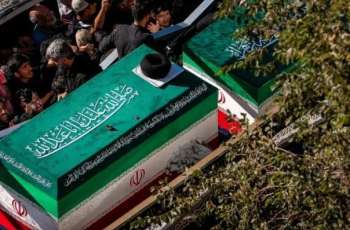
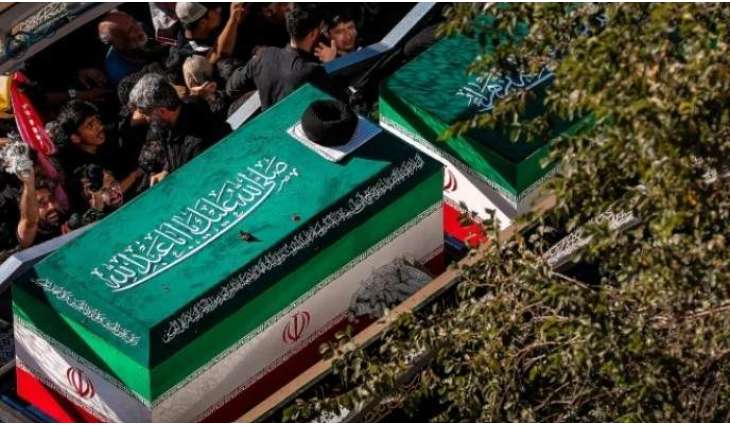
The escalation came as Iran held the funeral of its late Supreme Leader Ayatollah Ali Khamenei, who was buried at a shrine in Mashhad after days of nationwide mourning ceremonies. Iranian authorities said Khamenei was killed in a US airstrike at the outset of the conflict on February 28.
Iran's Revolutionary Guard Corps (IRGC) Navy accused the United States of disrupting the gradual reopening of the Strait of Hormuz, a vital global energy corridor. The force said commercial traffic through the strategic waterway has recovered to around 50 percent of pre-conflict levels under Iranian supervision and warned that any further US military intervention would trigger a "crushing response."
The US military has said its recent operations were intended to ensure freedom of navigation after accusing Iranian forces of attacking oil tankers in the region earlier this week.
Meanwhile, Iranian officials said US strikes carried out on July 8 and 9 killed 14 people and injured 78 others across five provinces. Iranian media also reported that one strike damaged a railway bridge used for trade with Russia and China.
Iran's military said it launched missiles against US military assets, including Patriot missile systems in Kuwait, an early-warning facility in Qatar and a fuel depot used by American forces in Bahrain.
Kuwaiti authorities said their air defence systems intercepted a cruise missile, three ballistic missiles and ten drones that entered the country's airspace. One person was reportedly injured by falling debris.
Air raid sirens also sounded in Jordan after Iranian missiles were detected. Jordanian authorities said eight missiles were intercepted and no casualties or property damage were reported.
The IRGC later claimed it had also fired ballistic missiles at the Azraq Air Base in Jordan, which hosts US forces, as well as another American military command facility in the region.
The latest escalation has drawn international concern. Qatar condemned attacks on commercial shipping while urging all sides to return to diplomacy. Türkiye and Oman also called for restraint during separate discussions with Iranian Foreign Minister Abbas Araqchi.
Araqchi also spoke with Pakistan's army chief, during which he criticised what he described as Washington's "warmongering policies."
The Strait of Hormuz, through which around 20 percent of the world's oil supplies pass, remains at the centre of the crisis. Iranian officials insist that maritime traffic through the waterway will resume only under arrangements approved by Tehran.
Despite the renewed fighting, US President Donald Trump said he does not expect the latest confrontation to develop into a prolonged war. Speaking during the NATO summit in Ankara, he said any further military action would be brief and expressed little interest in resuming negotiations with Tehran, suggesting that previous understandings between the two countries had effectively come to an end.