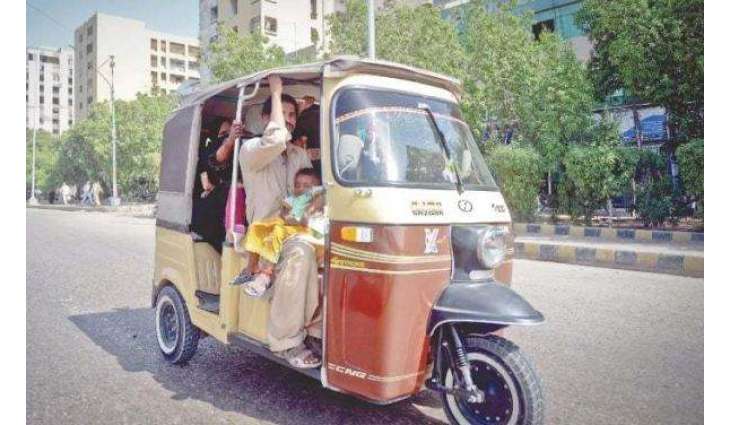
Action follows a recommendation from Deputy Inspector General (DIG) of Karachi, who suggests limiting movement of rickshaws to ease traffic bottlenecks
KARACHI: (UrduPoint/Pakistan Point News-Dec 4th, 2025) The Karachi administration has imposed a ban on the entry of 2 and 4-seater rickshaws on 20 major roads across the city to improve traffic flow. The decision was made by the Commissioner of Karachi under Section 144 of the Criminal Procedure Code (CrPC) to address growing traffic congestion in the metropolitan area.
An official notification issued by the Commissioner of Karachi said that the ban on rickshaws has now been extended to a total of 26 major roads in the city. This action follows a recommendation from the Deputy Inspector General (DIG) of Karachi, who suggested limiting the movement of rickshaws to ease traffic bottlenecks.
The restricted routes include key thoroughfares such as Shahrah-e-Faisal, I.I. Chundrigar Road, Shahrah-e-Qaideen, Sher Shah Suri Road, Shaheed Millat Road, Abdullah Haroon Road, Two Talwar, Shahrah-e-Firdousi, Stadium Road, Sir Shah Sulaiman Road, Rashid Minhas Road, M.A. Jinnah Road, and many more.
Specifically, rickshaws will be completely banned from entering these roads, including areas like Shahrah-e-Faisal, I.I. Chundrigar Road, the entire stretch of Stadium Road, Korangi Road, University Road, and the Orangi Road corridor. Additionally, the Super Highway intersection with Malir Halt, Korangi Crossing, and the surrounding areas will also be off-limits for rickshaws.
The ban is expected to be immediately enforced, with relevant authorities monitoring compliance to ensure smoother traffic operations in these high-traffic areas.
This move is part of Karachi's ongoing efforts to address the city's severe traffic congestion and streamline the flow of vehicles across key urban routes.