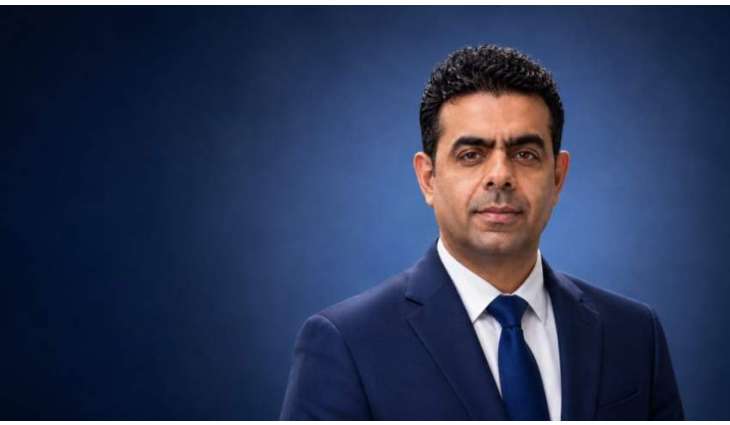
LAHORE: (UrduPoint/Pakistan Point News-May 5th, 2025) The boardrooms of the middle East have a problem that spreadsheets cannot solve. As corporations across the UAE,Saudi Arabia, and beyond expanded intomulti-layered, multi-jurisdictional empires over the past decade, the traditional audit machinery built for a slower, simpler world failed to keep pace. Fraud schemes grew more sophisticated.
Vendor networks grew more opaque. And the gap between what governance frameworks promised and what they actually delivered quietly widened. It is within this environment that Nabeel Ehsan developed and implemented governance frameworks aimed at strengthening enterprise integrity and risk oversight.
The Problem with Looking Backwards
Most corporate governance, as Ehsan sees it, is a forensic exercise conducted too late. Annual audits, compliance checklists, and control reviews are by design backward-looking instruments. They document what went wrong after the damage is done. In industries where a single procurement decision can involve hundreds of millions of Dirhams, that retrospective posture is no longer sufficient. Ehsan, a Chartered Accountant and member of the Institute of Chartered Accountants of Pakistan (ICAP), a member of ISACA, and a Member of the Institute ofDirectors (UK), spent years occupying senior internal audit positions at some of the region'smostcomplexconglomerates,including Ghassan Aboud Group and MOBH Holding Group,with earlier experience at Al Ghurair Group, AW Rostamani Group,and Ernst &Young. He currently serves as Group GRC Directorat Mawarid Holding Investment (MHI),aUAE-based multi-jurisdiction holding company operating across the UAE,KSA, and Pakistan. Across these roles, he increasingly focused on developing governance models that incorporate real-time monitoring and data-driven risk assessment alongside traditional reporting functions.
From Compliance to Intelligence
The answer Ehsan developed drew heavily on the convergenceofartificialintelligence,forensic analytics, and behavioural data science.Ratherthanwaitingforanomaliestosurfaceinquarterly reports, his frameworks embedded automated detection mechanisms directly into the financial and procurement systems where transactions occurred. Vendor network mapping, anomaly detection algorithms, and real-time dashboards enabled organizations to supplement traditional audit cycles with continuous monitoring capabilities.
A defining element of this approach is the deployment of Continuous Controls Monitoring (CCM) frameworks, which Ehsan has implemented across major conglomerates to shift GRC from periodic review to always-on assurance. His CCM architecture, grounded in COSO 2013 and ISO 31000, automates control testing across financial, procurement, and operational processes, enabling real-time exceptionflaggingwithoutmanualintervention.AtAWRostamani Group, this implementation contributed directly to the organisation receiving the Dubai Quality Gold Award in 2017, recognising sustained excellence in operational governance and control maturity.
Alongside CCM, Ehsan has led the design and deployment of Enterprise Risk Management (ERM) frameworks for complex holding structures, most recently completing a comprehensive ERM architecture for MHI encompassing risk appetite calibration,subsidiary-levelriskregisters, risk governance committee charters, and board-level reporting dashboards. This framework, aligned to ISO 31000 and the COSO ERM 2017 model, is designed to operate across multiple jurisdictions and business verticals simultaneously.His governance frameworks incorporate AI-assisted tools as operational components of contemporary governance, risk, and compliance programs.
Under frameworks he designed and led, organisations have recovered over AED 50 million through forensic investigations, including at MHI where confirmed fraud recoveries span multiple subsidiaries and project engagements, and achieved more than AED 45 million in cost savings through automated controls and operational efficiency gains.
Governance Intelligence: The Book
What distinguishes Ehsan from many practitionersishiscommitmenttoformalisingandsharing what he has learned. His ebook, Governance Intelligence: From Crisis to Control inaDigitally Enabled World, translates years of applied experienceincomplexenterpriseenvironmentsintoa structured intellectual framework accessible to governance professionals across industries and geographies.
The publication introduces several governance and risk-management frameworks developed by Ehsantoaddresschallengesassociatedwithdigitaltransformationandenterprise oversight. The
GRC-AI Nexus Model maps the integration points between traditional governance, risk and compliance frameworks and artificial intelligence capabilities. The Enterprise Risk Intelligence Loop (ERIL) reconceptualises risk management as a continuous cycle of detection, analysis, intervention, and learning rather than a static set of controls. Additional models including the Predictive Fraud Signal Architecture (PFSA), the Collusion Detection Matrix (CDM), and the Digital Control Integrity Index (DCII) address specific vulnerability areas that conventional frameworks have historically struggled to capture.
A further publication, The Corporate Fraud Playbook (2026), extends this intellectual contribution into a practitioner-focused taxonomy of fraudschemes,investigationmethodologies,andforensicrecoverystrategiesdrawnfrom real-world case experience. A third volume, The Predictive Governance Playbook (2026), completes the trilogy by shifting the lens from detection andresponsetoanticipation,equipping governance professionals with forward-looking frameworks for identifying risk signals before they crystallise into control failures or misconduct events.
Academic and Peer-Reviewed Contributions
Ehsan's practice is reinforced by a growing body of peer-reviewed academic work. He holds an MSc in Fraud and Risk Management from the University of Salford and has publishedresearch in internationally indexed journals including the International Journal of Economics and Financial Issues (IJEFI), the International Journal of Advanced Academic Research (IJAAIR), and the International Journal of Network Security and its Applications (IJNSA). His published frameworks, including the HGIA (Holistic Governance Intelligence Architecture) model,reflect an effort to connect academic research with practical enterprise governance applications.
Recognition and Reach
His work has received recognition from both professional organizations and industry stakeholders. His governance frameworks earned one of the highest PwC Quality Assurance ratings in the MENA region, an assessment that evaluates rigour and practical effectiveness rather than optics. His CCM implementation at AW Rostamani Group contributed to the organisation receiving the Dubai Quality Gold Award in 2017, recognising sustained impact in operational excellence and governance maturity. He continues to contribute beyond executive roles, participating in board advisory forums, enterprise governance councils, and executive committees across the Middle East. He is a Member of the Institute of Directors (UK), amember of ISACA, and has pursued Fellowship of the International Institute of Risk and Safety Management (IIRSM), with published contributions to IJEFI, IJAAIR, and IJNSA further reflecting his continued involvement in both the practical and academic dimensions of enterprise governance.