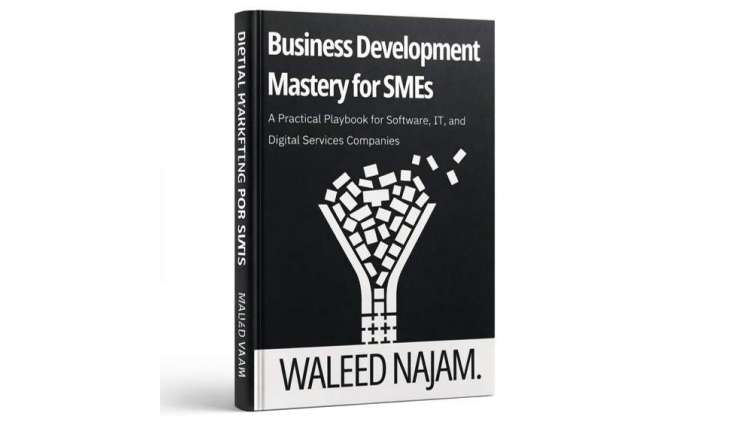
Instead of offering trendy growth hacks or short-term tactics, book argues that sustainable growth must be built through systems, structure, and deliberate design
LAHORE: (UrduPoint/Pakistan Point News-April 5th, 2025) In the fast-changing world of SMEs, one challenge appears repeatedly: fragmented growth. Marketing is scattered across platforms, sales conversations are lost in inboxes and WhatsApp chats, leads come inconsistently, and revenue often lacks a clear pattern. For many founders, growth feels less like a planned system and more like survival. This is the problem Waleed Najam’s Business Development Mastery for SMEs seeks to address. Instead of offering trendy growth hacks or short-term tactics, the book argues that sustainable growth must be built through systems, structure, and deliberate design.
That positioning is important because it marks a clear shift away from reactive growth. Najam does not encourage founders to chase every new platform or rely on luck. Instead, he presents business development as something that should be intentional, repeatable, and scalable. In a crowded and noisy market, that message feels both timely and necessary.
The Hidden Cost of Fragmentation
Fragmentation in business often looks like progress in the beginning. Ads are running, content is being posted, and teams appear busy, but this activity can hide a lack of real structure. Many SMEs operate without a connected system, with separate marketing efforts, weak lead tracking, unclear customer journeys, and follow-ups that depend too much on the founder.
Najam’s key point is that while fragmentation may bring short-term results, it cannot support long-term growth. Sustainable success requires an integrated system that connects marketing, sales, retention, and performance into one clear framework.
Why “Mastery” Is the Right Word
The idea of mastery is central to Najam’s philosophy. Instead of chasing speed through quick leads and rapid sales, he emphasizes building systems that are intentional, repeatable, and reliable over time. True mastery, in his view, comes from understanding how revenue is created, developing scalable processes, and reducing dependence on unstable external factors.
This makes the book more meaningful, as it presents business development not as a random activity but as a structured and carefully designed part of building a stronger business.
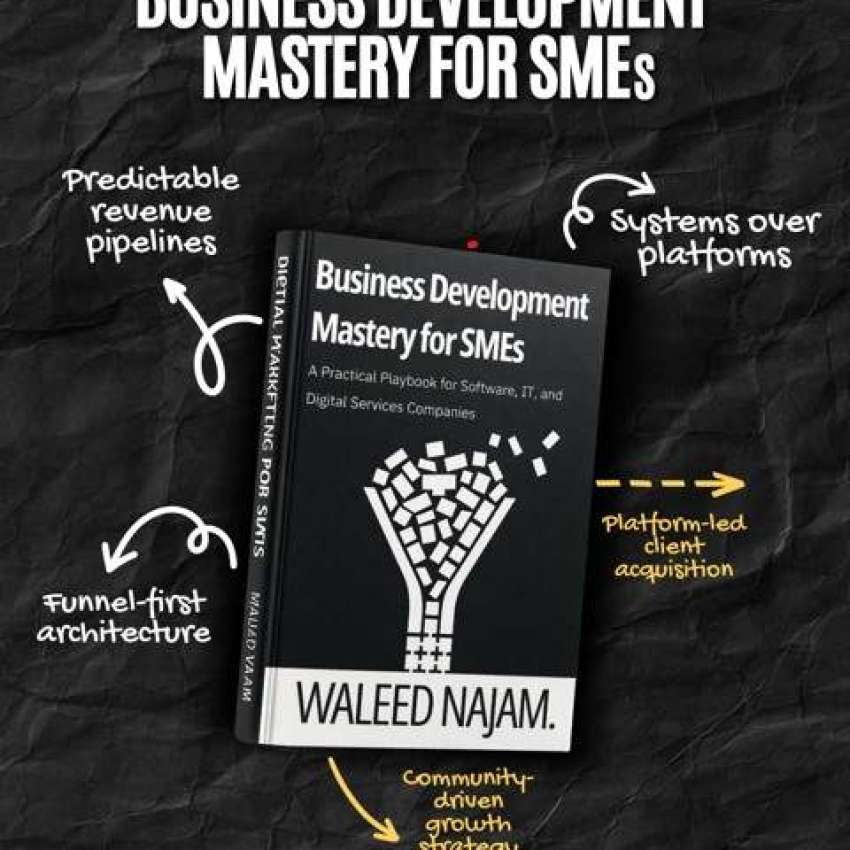
From Activity to Architecture
A key strength of Najam’s framework is that it shifts business thinking from simple activity to clear structure. Instead of focusing only on doing more tasks or trying more platforms, he encourages SMEs to think in terms of design, sequence, and systems. The framework asks deeper questions, such as how a stranger turns into a lead, how that lead becomes a customer, and how that customer stays for the long term. This moves business development away from random efforts and toward a more organized growth path.
For founders who feel overwhelmed by too many tools and channels, this approach is especially valuable because it shows that growth usually fails not from lack of effort, but from effort that is not connected to a larger system.
Builders Need Systems, Not Survival Tactics
A key message in Business Development Mastery for SMEs is that founders must think like builders, not just operators. Instead of only managing daily tasks, they need to create systems that make growth more consistent and less dependent on their direct involvement. This mindset is especially important for SMEs that want to scale without hitting founder-led limits.
Najam also shows that frameworks create stability in uncertain business conditions. By connecting acquisition, conversion, retention, automation, and performance tracking into one system, businesses can adapt more easily to change. The result is not just stronger growth but a more stable and resilient business.
Why This Matters in Pakistan
The ideas in Business Development Mastery for SMEs are especially relevant in Pakistan’s business environment, where many software houses, digital agencies, startups, freelancers, and IT service firms have strong talent but often grow in fragmented ways. Many businesses still depend on referrals, personal networks, WhatsApp conversations, manual proposals, and inconsistent outreach instead of a structured system. As a result, revenue may come in, but without a reliable pipeline or a clear customer journey behind it.
Najam’s framework directly addresses this gap by showing Pakistani SMEs that strong service delivery alone is not enough; they also need a predictable and well-designed business development system to support long-term growth.
A Broader Shift in the Pakistani Software Ecosystem
The importance of this book extends beyond itself because it reflects a broader shift in Pakistan’s software and digital services sector. Where many firms once believed that good work alone would lead to growth, today’s competitive market demands much more. Businesses now need clear positioning, structured pipelines, conversion systems, and repeatable revenue models. Najam’s work reinforces this shift by urging founders to move away from random lead chasing and toward predictable, system-driven growth, which is especially important as Pakistani firms compete for global clients and long-term contracts.
At the same time, Najam’s message is that SMEs do not necessarily need more tactics. What they need is better organization and integration of the tactics they already use.
That is what makes Business Development Mastery for SMEs both timely and practical, because its focus is not simply on doing more, but on building better.