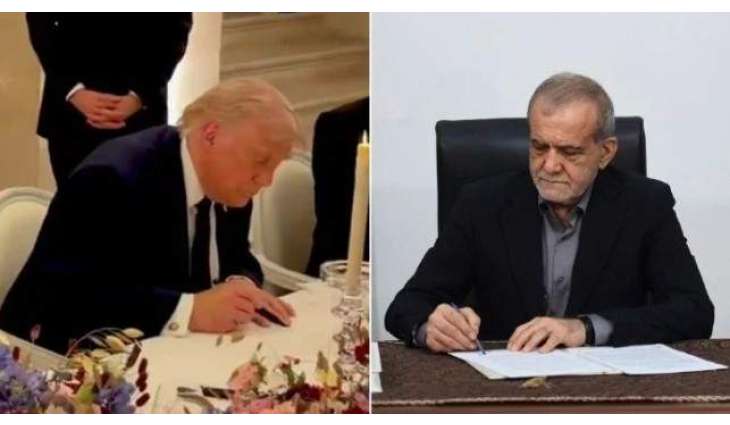
The memorandum of understanding was signed during a candlelit dinner at the Palace of Versailles following a G7 summit, where French President Emmanuel Macron and other leaders were present
WASHINGTON/PARIS/TEHRAN: (UrduPoint/Pakistan Point News-June 18th, 2026) US President Donald Trump and Iranian President Masoud Pezeshkian have signed a landmark agreement intended to bring an end to the ongoing middle East conflict, with Tehran agreeing to reduce its enriched uranium levels in exchange for broad economic relief.
The memorandum of understanding was signed during a candlelit dinner at the Palace of Versailles following a G7 summit, where French President Emmanuel Macron and other leaders were present. Video footage shared by a Trump aide showed attendees applauding the signing.
Speaking briefly to reporters after leaving the venue, Trump said, “Just signed it.”
According to Iran’s Foreign Ministry spokesperson Esmaeil Baqaei, as reported by state media IRNA, the agreement was formally concluded with signatures from both presidents.
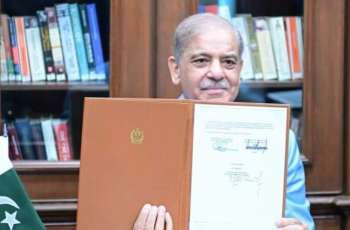
The deal has also received international political attention, with Pakistan’s Prime Minister Shehbaz Sharif stating on social media platform X that the agreement would take immediate effect.
Under the terms of the accord, Iran is expected to reopen the Strait of Hormuz as an initial step, while the United States will lift its naval blockade and ease oil-related sanctions that have significantly impacted Iran’s economy. The agreement also outlines plans for potential international financial support for reconstruction once a final nuclear arrangement is reached.
The framework envisions a two-month negotiation period to work out long-term provisions regarding Iran’s nuclear programme. It includes provisions for the dilution of Iran’s enriched uranium stockpiles under supervision of the International Atomic Energy Agency (IAEA).
A US official clarified that Washington would not be required to directly fund the proposed reconstruction mechanism, which could total hundreds of billions of Dollars with support from regional partners.
Reactions to the agreement have been mixed. Iranian officials described the deal as a diplomatic success, while critics in the United States, including Senator Bill Cassidy, called it a major strategic setback, arguing that sanctions relief and reduced military pressure could weaken US leverage.
Meanwhile, Hezbollah leader Naim Qassem described the development as a “major victory” for Iran, saying it also reflected broader regional implications of the ceasefire framework.
The agreement comes after months of hostilities that reportedly included missile strikes, drone attacks, and disruptions to key maritime routes such as the Strait of Hormuz, a critical global energy corridor.
Oil markets reacted with volatility following the announcement, briefly surging before stabilising as investors assessed the political developments.
Further negotiations between Washington and Tehran are expected to begin immediately, with the reopening of the Strait of Hormuz identified as the first practical step under the agreement.