Official sources say major tax relief under consideration in upcoming annual budget
ISLAMABAD: (UrduPoint/Pakistan Point News-June 11th, 2026) The federal government is set to present the budget for fiscal year 2026-27 tomorrow, with a total size exceeding Rs17.5 trillion, according to official sources.
Sources said the budget is expected to include relief measures worth up to Rs50 billion for salaried individuals and pensioners, alongside proposed reductions in certain tax rates. The Federal board of Revenue (FBR) revenue target for the upcoming fiscal year is expected to be set at Rs15,267 billion.
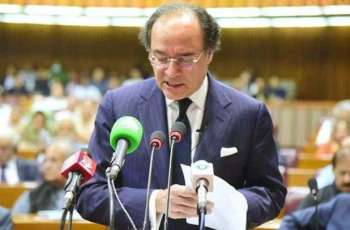
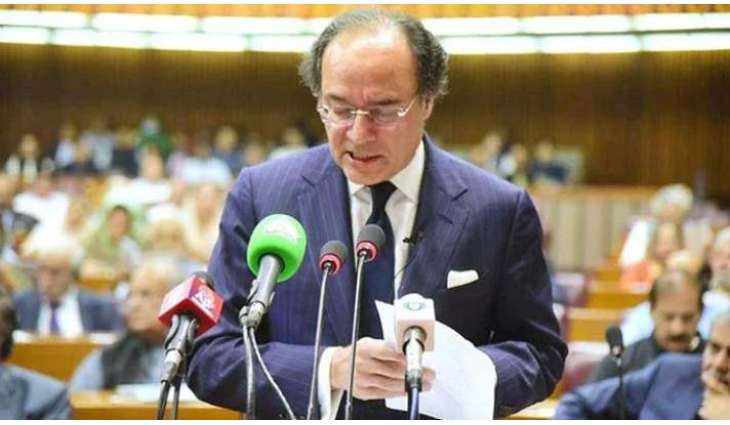
According to reports, a special meeting of the federal cabinet chaired by Prime Minister Shehbaz Sharif will approve the budget proposals and salary and pension increases for government employees. Following cabinet approval, Finance Minister Muhammad Aurangzeb will present the budget in Parliament.
No major tax changes for key sectors
Sources said the government has decided not to introduce changes in taxes on solar panels, stationery items, and stock market transactions.
A proposal to increase sales tax on solar panels from 10 per cent to 18 per cent has reportedly been withdrawn, while a suggested increase in tax on stationery items will not be included in the budget.
However, sales tax on imported electric vehicles (EVs) is expected to rise up to 25 per cent, while hybrid vehicles are likely to remain under the existing tax regime.
Incentives for electric vehicles, carbon levy on fuel cars
The budget is expected to provide tax relief for eco-friendly electric vehicles, while proposing a carbon levy on conventional fuel-powered vehicles. Large vehicles may become more expensive, whereas locally manufactured EVs are expected to become cheaper under proposed incentives.
To promote local EV manufacturing, the government is considering reducing customs duty on motors, batteries and other components to one per cent. A one per cent sales tax regime is also proposed, along with exemptions from federal excise duty, capital value tax and withholding tax.
Revenue and fiscal targets
Sources said the government plans to collect Rs1,727 billion through petroleum levy in the next fiscal year.
Interest payments on debt are estimated at Rs7,824 billion, while defence spending is projected at around Rs3 trillion. The trade deficit is expected to exceed $37 billion, with exports targeted at $32.8 billion against imports of $70 billion.
Growth and employment targets
The government has set an agriculture growth target of 3.8 per cent, while industrial growth is projected at 4 per cent. Large-scale manufacturing is expected to grow by 4.5 per cent, and services by 4.2 per cent.
Officials said the government aims to create around 2 million new jobs, including 1.1 million in services, 500,000 in industry, and 400,000 in agriculture.
The National Economic Council (NEC) has already approved key macroeconomic targets as well as a national development plan worth Rs3,669 billion. The federal Public Sector Development Programme (PSDP) has been set at Rs1,000 billion, while provincial development allocations stand at Rs2,218 billion.
Salaried class tax relief under review
Sources said the government is considering tax relief of around Rs50 billion for salaried individuals, including restructuring of income tax slabs from six to eight categories.
Relief is being considered for individuals earning above Rs183,000 per month, with possible reductions in tax rates for higher income brackets. Under the proposal, tax on monthly income up to Rs267,000 may be reduced from 25 per cent to 20 per cent, benefiting around 400,000 employees.
Other proposals include revised tax rates of 29 per cent on income up to Rs467,000 per month, 32 per cent on income up to Rs583,000, and a maximum rate of 35 per cent for higher income groups. The surcharge on individuals earning above Rs10 million annually may also be abolished.
New taxation measures and reforms
The budget is expected to bring crypto transactions into the tax net, with capital gains tax proposed on profits from digital Currency trading. Tax rates on crypto assets may range between 10 per cent and 30 per cent.
Officials are also considering ending tax exemptions for former tribal areas and expanding the sales tax base by including dozens of essential food items such as infant formula milk, ghee, cooking oil, tea, sugar, and powdered milk under the third schedule. Printing of retail prices on packaging is also being proposed as mandatory.
New taxation measures worth Rs220 billion are expected, while overall revenue gains from enforcement and new taxes are projected at Rs1 trillion.
A fixed sales tax regime for the steel sector, digital monitoring of production, and stricter penalties for non-compliance with point-of-sale (POS) systems are also part of the proposed reforms.
Energy and other proposals
The budget may also introduce federal excise duty on naphtha petroleum products and propose a reduction of 1 to 2 per cent in the super tax.
Officials added that certain heavily taxed goods are likely to remain under existing rates, which may keep prices elevated.
Separately, proposals include introducing capital gains tax on crypto trading profits and inserting a new clause in Section 37 of the Income Tax Ordinance, 2001, to tax gains from digital transactions.