By 2024 the provincial government shifted again, this time toward the Nigahban Ramzan Package, which emphasised doorstep delivery of ration packages to millions of households
LAHORE: (UrduPoint/Pakistan Point News-Jan 31st, 2026) Every year, the arrival of Ramzan places governments in Pakistan under pressure to ensure that essential food items remain within the reach of ordinary citizens. In Punjab, the traditional response has been the establishment of Ramzan bazaars—temporary or semi-permanent markets where vegetables, fruits, flour, sugar and other daily necessities are offered at regulated prices. The concept is not new. For decades, provincial administrations have used these bazaars as a tool to control price volatility during the holy month, particularly when market demand increases sharply.
What has changed over the years is the scale of government involvement and the cost associated with it. Earlier Ramzan relief models relied heavily on direct subsidies. These subsidies were designed to reduce the retail price of staple items, with the provincial government absorbing the difference between the market cost and the controlled price offered to consumers. In principle, the approach ensured short-term relief for households. In practice, it meant that every Ramzan relief programme required substantial allocations from the provincial budget.
Records from previous years illustrate this pattern clearly. In 2018, the Punjab government launched a Ramzan relief package that included more than three hundred Ramzan bazaars across the province. Around thirty-two model bazaars were also converted into Ramzan markets for the month. At the same time, approximately two thousand community dastarkhwans were set up to provide free Sehr and Iftar meals. Reports suggested that nearly Rs11 billion were allocated primarily to subsidise flour prices.
A similar structure continued in 2019, when the provincial cabinet approved more than three hundred Ramzan bazaars and a comparable number of community feeding arrangements. Subsidies were again built directly into the pricing of commodities such as flour, sugar, cooking oil and poultry. For example, official reports at the time indicated that a ten-kilogram flour bag was sold at a reduced rate supported by an explicit government subsidy per bag.
The approach evolved during the following years, but the reliance on public funds remained consistent. In 2021 the provincial government announced a Ramzan package worth roughly Rs7 billion, again anchored in a network of more than three hundred bazaars. In 2022, news reports suggested that around Rs8 billion had been allocated for Ramzan relief through more than three hundred markets and subsidised items including vegetables and pulses.
In 2023 the caretaker administration attempted a different strategy. Instead of relying primarily on bazaars, the government introduced a large-scale free flour distribution programme. The initiative reportedly carried a cost of around Rs53 billion and aimed to provide three ten-kilogram flour bags to eligible households. The programme was ambitious but also exposed logistical challenges, including overcrowded distribution centres and technological difficulties with verification systems.
By 2024 the provincial government shifted again, this time toward the Nigahban Ramzan Package, which emphasised doorstep delivery of ration packages to millions of households. While some Ramzan bazaars still operated, the emphasis moved toward direct distribution of essential commodities rather than large physical markets.
Against this background, the policy decision taken in January 2026 appears to represent another turning point. During a meeting chaired by Chief Minister Maryam Nawaz Sharif on 24 January 2026, officials reviewed the arrangements for Ramzan markets across Punjab. The meeting concluded with a decision that the operational responsibility for Ramzan bazaars would be placed under the Punjab Sahulat Bazaars Authority (PSBA).
At first glance, the decision may appear administrative. In reality, it carries broader implications for how Ramzan relief is organised in the province. The Authority already manages a network of regulated markets designed to offer everyday commodities at controlled prices. Extending its role to the Ramzan bazaar system effectively places the entire operational framework of these markets under a single institutional structure.
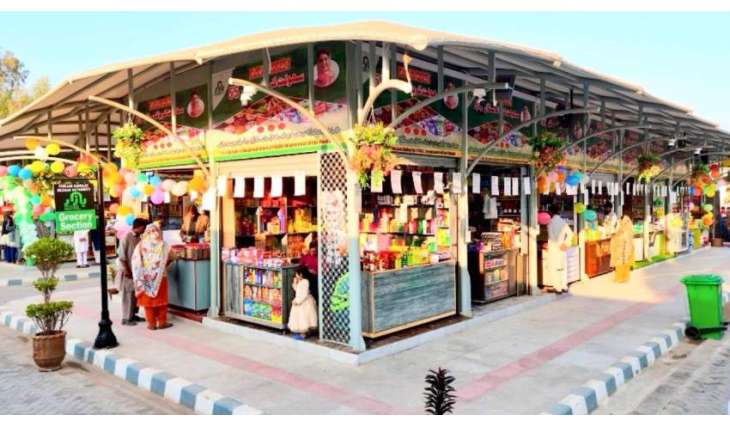
The scale of the assignment is significant. Planning documents suggest that around seventy-five markets will function across the province during Ramzan. Forty-nine of these are permanent Sahulat Bazaars that already operate year-round in different districts. Fifteen additional markets will operate under the “Sahulat on the Go” model, which uses mobile infrastructure to serve densely populated urban areas. The remaining eleven markets are expected to be temporary Ramzan bazaars set up in district headquarters where no permanent Sahulat Bazaar currently exists.
Together, these arrangements are intended to provide a province-wide network of regulated markets during the holy month. Essential commodities—such as flour, sugar, vegetables, fruits, poultry and cooking oil—are expected to be sold at prices below those notified by district administrations. Officials involved in planning say the target is generally to keep prices up to ten percent lower than the official District Commissioner rates.
Certain commodities have specific benchmarks. Sugar is expected to be available around Rs140 per kilogram, while a twenty-kilogram flour bag may be sold for roughly Rs850. Poultry items could see reductions of around Rs15 per kilogram, while cooking oil brands may offer discounts ranging between Rs10 and Rs16 depending on the product.
What distinguishes this year’s initiative from previous Ramzan relief programmes is the financial framework. According to officials familiar with the planning process, the provincial government has not allocated a separate subsidy package for the Ramzan bazaars this year. In other words, the markets are expected to operate without the large budgetary support that traditionally accompanied such programmes.
For the Sahulat Bazaars Authority, this represents a substantial operational challenge. Price reductions must still be offered to consumers, yet they must be achieved without the financial cushion that subsidies previously provided. The task will require negotiation with vendors, coordination with wholesalers and strict monitoring of supply chains to ensure that stalls remain stocked throughout the month.
The Authority is currently led by Director General Naveed Rafaqat Ahmad, whose professional background includes public financial management and institutional administration.
Over the past few years, he has been associated with the development of the Sahulat Bazaar system as a structured retail framework intended to stabilise prices of essential commodities.
Observers of public administration often note that such initiatives rely heavily on managerial coordination rather than purely financial intervention. The Sahulat Bazaar model, in particular, attempts to regulate prices through controlled market spaces, vendor participation agreements and monitoring mechanisms rather than direct government subsidies. Whether that model can be extended effectively to Ramzan bazaars across Punjab remains an open question.
The leadership challenge is therefore as much administrative as it is logistical. Managing dozens of markets simultaneously during the busiest consumption period of the year requires constant coordination between district authorities, vendors, suppliers and regulatory teams. Ensuring that prices remain below official benchmarks without government subsidies adds another layer of complexity.
For Ahmad and his team, the coming Ramzan will therefore represent a moment of scrutiny. The Authority must demonstrate that a network of regulated markets can operate efficiently enough to provide consumer relief without large public spending. If the system functions smoothly, it may strengthen the argument that market management and administrative coordination can substitute for direct subsidies.
At the same time, the experiment carries risks. Vendors must remain willing to participate despite narrower profit margins, and supply chains must remain stable throughout the month. Any disruption—whether in commodity supply, price monitoring or vendor participation—could undermine the entire system.
From a governance perspective, the initiative also raises broader questions about how welfare policies evolve. Pakistan’s Ramzan relief programmes have historically moved between different models: subsidised markets, direct cash assistance, commodity distribution and now a hybrid approach built around regulated markets. Each model reflects an attempt to balance fiscal constraints with the political and social expectation that governments should provide relief during the holy month.
The coming Ramzan will therefore serve as a practical test of whether the Sahulat Bazaar framework can support a province-wide relief mechanism under more constrained financial conditions. The results will likely influence future policy discussions on whether Ramzan relief should depend primarily on subsidies or on more structured market systems.
For now, the responsibility rests with the Sahulat Bazaars Authority and its management. As shoppers begin to visit these markets during the holy month, the effectiveness of the model will become visible not in policy statements but in the everyday experience of citizens searching for affordable food.