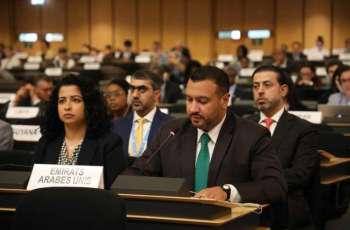
GENEVA, (Pakistan Point News - 04th Jul, 2026) From 6 to 10 July 2026, Geneva brings together major United Nations discussions on digital cooperation and artificial intelligence (AI), including the World Summit on the Information Society Forum, the AI for Good Global Summit and the first session of the UN Global Dialogue on AI Governance.
For developing countries, the central question is no longer only how to expand digital access, but how to turn that access into productive capacity, competitive firms, quality jobs and new trade opportunities.
The scale of the digital economy has changed sharply. Global e-commerce now exceeds $28 trillion, while digitally deliverable services account for 56% of global services exports, but only 16% in least developed countries. That gap shows why digital transformation is not only a technology issue, but a development issue.
The challenge is not only connectivity, but what countries can do with it. Many developing countries, particularly the least developed, still face gaps in infrastructure, skills, finance, regulation and institutional capacity. The risk is that AI and data-driven markets widen existing divides unless countries can capture more value from digitalization.
UN Trade and Development (UNCTAD) is helping anchor the development dimension of Geneva’s digital week. It co-organises the World Summit on the Information Society Forum, chairs the United Nations Group on the Information Society in 2026, and contributes to the UN Global Dialogue on Artificial Intelligence Governance. It also co-leads, with the UN Industrial Development Organisation (UNIDO), work on inclusive digital economies under the Global Digital Compact, helping translate global commitments into practical support for countries.
Through its work on e-commerce, digital trade, data governance and the digital economy, UNCTAD supports countries in identifying practical policy options suited to their needs and priorities.
Closing the digital divide is no longer only about infrastructure and connectivity. It is about whether developing countries can use digital tools and AI to build productive capacity, support local firms, create quality jobs and expand trade opportunities, including for women.
Partnerships like eTrade for all show what practical cooperation can look like. Scaling that support will help determine whether the AI-driven phase of digital transformation is more inclusive than the last.