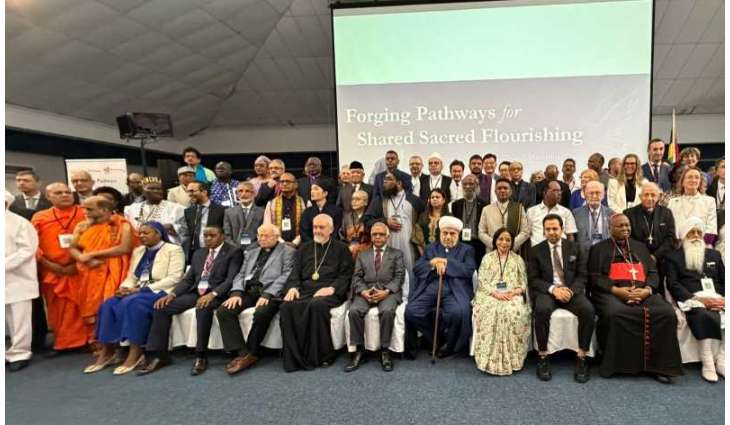
PORT LOUIS, (Pakistan Point News - 23rd Jun, 2026) The Muslim Council of Elders participated in the opening session of the 2026 International Council Meeting of Religions for Peace, hosted by the Republic of Mauritius from June 23 to 25 under the theme, “Forging Pathways for Shared Sacred Flourishing.” The event was attended by Dharambeer Gokhool, President of the Republic of Mauritius, along with a broad range of religious and intellectual leaders, policymakers, and representatives of religious institutions from around the world.
Over the course of three days, the international meeting will address a number of pressing global issues and challenges while exploring ways to harness religious and ethical values to support sustainable development, promote social justice, protect human dignity, and foster peace and solidarity among peoples.
Mohamed Abdelsalam, Chief Advisor to the Muslim Council of Elders, emphasised that today’s global challenges require enhanced cooperation among religious and intellectual leaders, as well as policymakers, to reinforce shared ethical and human values.
He noted that the Council continues to play an active role in international platforms dedicated to dialogue and coexistence, in line with its mission to promote understanding and cooperation among peoples, cultures, and religions.
Abdelsalam alongside His Eminence Sheikh ul-Islam Allahshukur Pashazadeh, a member of the Muslim Council of Elders and Chairman of the Caucasus Muslims board, are also participating in several key sessions dedicated to discussing the ethics of artificial intelligence and its humanitarian implications. During these sessions, they are presenting the Council’s vision on the importance of harnessing these technologies for the benefit of humanity, as well as the need to strengthen ethical frameworks and promote responsible governance to ensure the protection of human dignity and the preservation of human life, particularly in times of conflict and crisis.
The participation of the Muslim Council of Elders comes as part of its ongoing efforts to contribute to international discussions on the future of artificial intelligence and its ethical and humanitarian dimensions. It also seeks to enhance cooperation among religious leaders, policymakers, and international institutions to ensure that modern technologies are used to serve humanity and to advance the values of peace, justice, and human fraternity.