The 138-page report, titled “ICT Governance Model,” was prepared by a high-level committee headed by Planning Minister Ahsan Iqbal
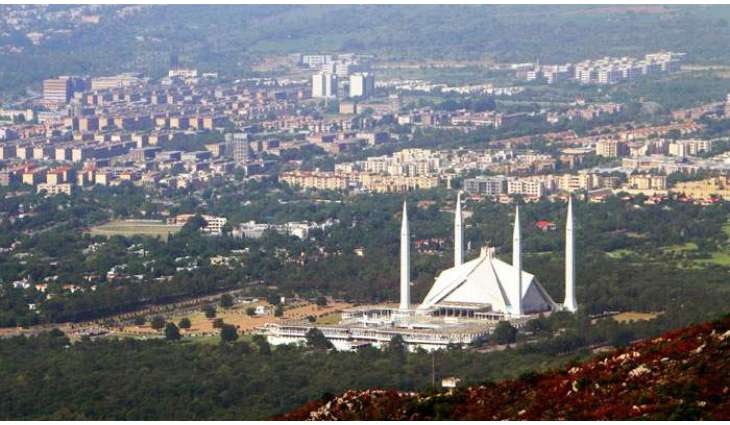
ISLAMABAD: (UrduPoint/Pakistan Point News-June 5th, 2026) The Federal government has prepared a comprehensive reform plan aimed at overhauling the governance structure of the Islamabad Capital Territory (ICT), including the establishment of an elected regional government, greater administrative integration and the adoption of a smart city model to improve service delivery and long-term urban planning.
The 138-page report, titled “ICT Governance Model,” was prepared by a high-level committee headed by Planning Minister Ahsan Iqbal.
The initiative was developed in response to concerns that Islamabad has evolved from a planned administrative capital into a metropolitan city with a population exceeding 2.4 million, while institutional development has failed to keep pace with its growth.
The report has already been submitted to Prime Minister Shehbaz Sharif. Its central proposal is the creation of a representative Islamabad Capital Territory Government (ICTG) with administrative and financial autonomy comparable to that of provincial governments, while preserving Islamabad’s status as the federal capital.
Under the proposed framework, a 27-member Islamabad Capital Territory Assembly would be established, comprising 21 directly elected members, five reserved seats for women and one seat for minorities.
The assembly would elect its own head, who could hold the title of either Chief Minister or Mayor, with the final designation to be decided by the federal government. The plan envisages transferring most administrative powers to the ICT government, while authority over law and order and master planning would remain with the federal government due to the capital’s special status.
The proposal also calls for the transfer of administrative responsibilities currently held by the Capital Development Authority (CDA) and various federal ministries and institutions to the ICT government in order to eliminate overlapping mandates and institutional conflicts.
As part of the reform package, a comprehensive Islamabad Capital Territory Government Act has been proposed to consolidate existing local government and development laws into a single legal framework. The ICT government would operate under its own rules of business, clearly defining departmental structures, administrative hierarchies and financial powers.
To oversee implementation, the report recommends the formation of several committees. A legislative committee would draft the required laws and include the law minister, ICT members of the National Assembly, the secretaries of law and interior, the CDA chairman and other officials.
A financial committee, headed by the planning minister, would determine resource allocation and mechanisms for utilizing local tax revenues. A transition committee would supervise the phased transfer of powers and ensure administrative continuity throughout the process.
According to the report, the reforms are not expected to create a significant additional financial burden, as the focus is on restructuring and integrating existing institutions rather than establishing entirely new ones, except where necessary.
The plan also includes an Islamabad Smart City Model aimed at transforming the capital into a modern, environmentally sustainable and citizen-focused city. The report emphasizes that institutional reforms must accompany digital transformation, arguing that technology alone cannot resolve governance challenges without structural changes.
The smart city vision is based on three key pillars: developing Islamabad as a “Nature Capital” through eco-tourism and conservation of natural resources, strengthening cultural identity and economic activity through the promotion of heritage and culture, and creating an open and inclusive capital that encourages public participation and global engagement.
Under the proposed “Destination Islamabad” strategy, authorities expect increased tourism, job creation, private investment and higher local revenues. To improve public services, the report proposes the establishment of six specialized agencies covering health, education, social welfare, tourism and culture, environment and climate change, and digital and e-governance.
Each agency would be led by a professional head and operate under a performance-based accountability system.
A key component of the reforms is the introduction of an integrated digital governance platform that would manage land and property records, licensing, taxation, identity verification, complaint resolution and service monitoring through a unified system to enhance transparency and efficiency.
The implementation plan spans five years and would be carried out in phases, beginning with legal and institutional reforms, followed by the establishment of new structures, digital integration and performance consolidation.
The reform agenda is aligned with national initiatives, including Uraan Pakistan, the Digital Pakistan Policy, the National Urban Policy Framework and the Sustainable Development Goals. If implemented, the plan would bring a fundamental transformation to governance in the federal capital and position Islamabad as a model of modern, efficient and digital governance.