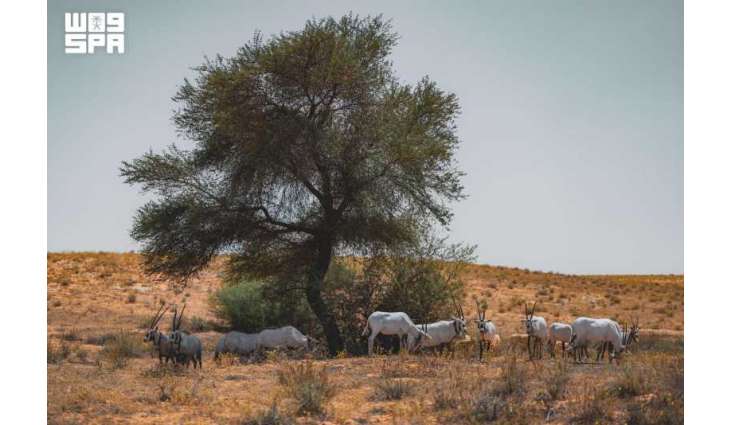
Rafha, June (پاکستان پوائنٹ نیوز 27 يونيو 2026ء) Acacia trees play a vital role in maintaining ecological balance by providing shelter and food for a wide range of wildlife, birds, and insects, thereby supporting the sustainability of desert ecosystems. Their deep root systems help stabilize the soil and reduce erosion, making them an important element in efforts to combat desertification and restore vegetation cover.
Environmental specialists highlighted the acacia tree's significant environmental and economic value. It thrives under harsh climatic conditions and demonstrates a high tolerance for drought and extreme temperatures. The tree can grow to more than eight meters in height and is known for its longevity. It is also a source of some of the finest and most valuable natural honey, while providing timber, charcoal, and gum Arabic that support local economic activity and the beekeeping sector.
The acacia tree is also valued for its broad, dense canopy, which provides abundant shade in desert environments and offers refuge for both people and wildlife during periods of extreme summer heat.
Several species of acacia grow across the Kingdom, including the Najdi acacia, renowned for its exceptional resilience in desert conditions. Other prominent species include the Salam acacia, an important nectar-producing tree, along with a variety of other acacia species distributed across the Kingdom's desert landscapes.