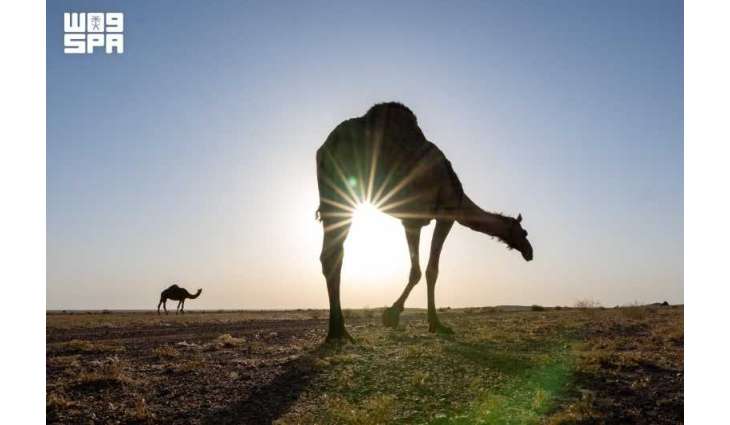
Buraidah, June (پاکستان پوائنٹ نیوز 23 يونيو 2026ء) Camels possess unique characteristics that make them exceptionally well adapted to harsh climatic conditions. They can withstand high temperatures and prolonged periods without water, while their physical build enables them to travel long distances across sandy terrain with ease.
Today, the camel sector is one of the Kingdom's promising economic sectors, encompassing a wide range of activities that include milk and meat production, industries based on camel wool and hides, and heritage, sporting, and tourism activities that attract growing numbers of enthusiasts and visitors from within Saudi Arabia and abroad. Camel milk has attracted increasing attention for its nutritional value, containing essential proteins, vitamins, and minerals. Camel breeding also serves as a source of income for many breeders across the Kingdom, particularly in desert and rural areas.
Camels have long held a prominent place in Arab cultural heritage, featuring in poetry, literature, and folk sayings. They were a cornerstone of Bedouin life and played a role in shaping local culture, which continues to be reflected in national occasions and heritage events.
In recent years, camels have received growing attention through specialized festivals and events that highlight their historical and economic significance, support the preservation of indigenous breeds, and encourage investment in the sector in line with cultural and economic development objectives.
From an environmental perspective, camels play an important role in sustaining desert ecosystems. They are well adapted to natural vegetation in arid regions and contribute to the efficient use of natural resources compared with other livestock species that require larger quantities of water and feed.
The camel remains a living symbol of the history of the Arabian Peninsula and its people, embodying both authenticity and development. Efforts continue to enhance its status as a cultural heritage asset and an economic resource that contributes to sustainable development and reflects the deep bond between people and their environment.
World Camel Day is observed annually on June 22 as an international occasion highlighting the historical, economic, and cultural importance of camels and their vital role in supporting food security and improving livelihoods in desert and semi-arid regions around the world.