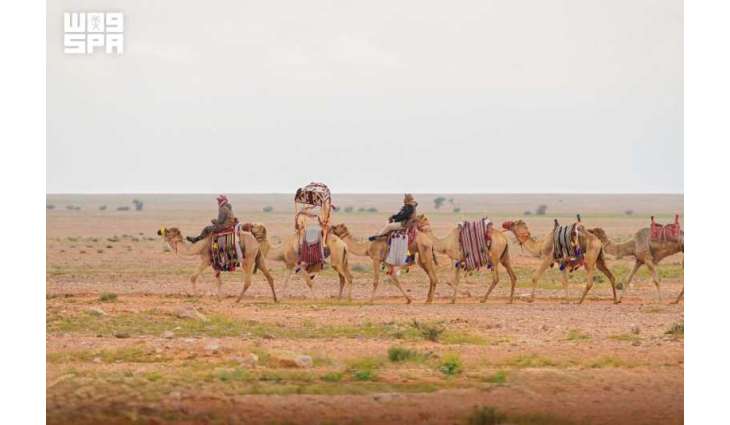
Arar, June (پاکستان پوائنٹ نیوز 23 يونيو 2026ء) Among the traditional knowledge associated with camels, the skill of camel training stands out as one of the oldest forms of Bedouin expertise. It refers to the process of training camels to become familiar with humans, obedient, and responsive to commands, preparing them for riding, carrying loads, and accompanying people in daily life.
Camel training was historically linked to specific seasons, with breeders selecting suitable times to begin the process, particularly when camels reached an age conducive to learning new skills. Experts note that younger camels are generally more receptive to learning and adaptation than older animals.
Those knowledgeable in camel heritage emphasize that training is a gradual process aimed at building trust between the camel and its trainer. It involves conditioning the animal to respond to various commands and adapt to different environments until it becomes calm and capable of performing required tasks.
Training stages include familiarizing camels with riding and loading equipment, gradually teaching them to kneel, rise, walk, and stop, and preparing them to interact with sounds, movement, people, and vehicles. These skills enable camels to participate in heritage and sporting activities.
Camel training represents an important aspect of the historical relationship between Bedouin communities and their desert environment. It reflects generations of accumulated knowledge in dealing with camels, which remain an enduring symbol of patience and perseverance in Saudi cultural heritage.