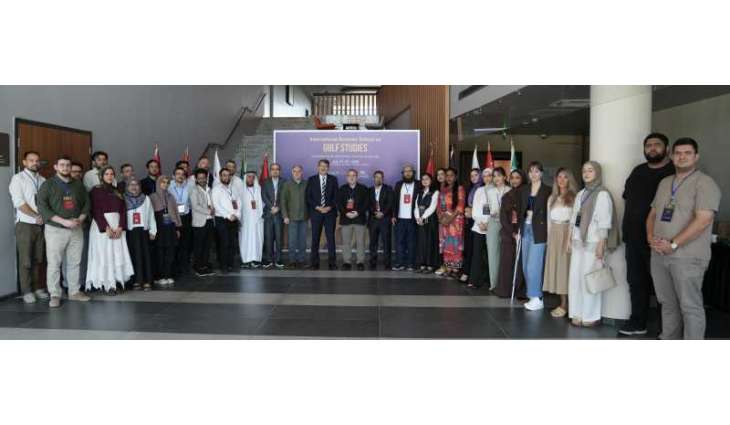
SHARJAH, (Pakistan Point News - 24th Jul, 2026) The Sharjah International Foundation for the History of Arab and Muslim Sciences (SIFHAMS) at the University of Sharjah (UOS) and the Centre for Gulf Studies and Global Policy (GSGP) at Ibn Haldun University in Istanbul, Republic of Türkiye, jointly organised the International Summer School on Gulf Studies under the theme, "Understanding the Gulf: Politics, Economy, and Society," over five days at Ibn Haldun University.
The summer school brought together students, postgraduate candidates, and early-career researchers from around the world for an intensive academic program dedicated to exploring the history, politics, economy, and society of the Gulf region.
The activities of the summer school kicked off in the presence of Professor Atilla Arkan, Rector of Ibn Haldun University; Professor Ismail Numan Telci, Director of the Center for Gulf Studies and Global Policy at Ibn Haldun University; and Professor Mesut Idriz, Director of SIFHAMS, who delivered a lecture entitled "Traditions and Transformations in Gulf Society," in which he explored the historical and cultural developments that have shaped Gulf societies and their transformation in the modern era.
Dr Saleh Al-Leheabi, from the Department of History and Islamic Civilisation at the University of Sharjah, delivered a lecture entitled “Knowledge, Libraries, and Scholarly Networks in the Arab Gulf.”
His presentation highlighted the intellectual history of the Gulf region, emphasising the role of knowledge institutions, libraries, and scholarly networks in fostering cultural and scientific exchange across the Arab Gulf.
Throughout the five-day programme, participants attended lectures delivered by distinguished academics and specialists from leading universities and research institutions, covering a wide range of topics including Gulf society, regional politics, foreign policy, security, political economy, cultural heritage, and intellectual history.
The programme provided an important platform for interdisciplinary dialogue and academic exchange among scholars and students from diverse cultural and academic backgrounds.