DUBAI, (Pakistan Point News - 23rd Jul, 2026) The World Governments Summit Organisation affirmed that the future of urban development lies in building "sentient cities" that go beyond technological advancement by developing a deep understanding of people's needs, citizens' behaviours, and community aspirations. This approach enhances quality of life while promoting inclusivity, sustainability, and social well-being.
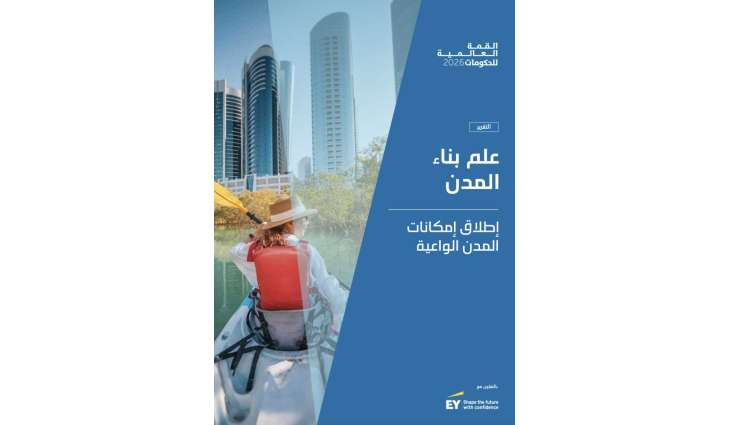
These findings are presented in a new strategic report titled "Urban Science: Unlocking Sentient Cities," prepared by the World Governments Summit Organisation in collaboration with EY (Ernst & Young).
The report offered a forward-looking perspective on the growing role of urban science as a multidisciplinary field that combines data analytics, artificial intelligence, environmental monitoring, and behavioural sciences to support evidence-based urban decision-making and build cities that are better able to adapt and respond to the needs of their residents.
The report further explained that traditional urban planning models, which for decades focused primarily on infrastructure development and operational efficiency, are undergoing a significant transformation toward human-centred models.
Residents are becoming the focal point of planning, design, and governance processes, helping to strengthen social cohesion, improve access to services, promote public health, achieve environmental sustainability, and ensure equal opportunities.
The report noted that sentient cities represent the next stage in urban evolution after smart cities. They rely on integrated urban data systems and advanced analytics to understand residents' needs and daily experiences, anticipate future challenges, and improve decision-making.
It emphasised that the success of future cities will not be measured by the amount of technology they deploy, but by their ability to use technology within a framework that balances wisdom, ethics, and human priorities.
Mohammad Yousef Al Sharhan, Managing Director of the World Governments Summit, said that the report is part of the summit's efforts to anticipate the major transformations that will shape the future of governments.
He explained that sentient cities represent the next phase of urban development, using technology and data to build cities that better understand people and respond to their needs.
Al Sharhan added that cities have become increasingly interconnected and dynamic due to rapid population growth, accelerating technological change, and evolving societal expectations. This requires advanced urban planning methodologies based on urban science, enabling governments to better understand the complex relationships between different components of the urban environment and make more accurate, data-driven decisions.
He further emphasised that cities capable of integrating innovation and advanced technologies into a development vision centred on people will be best positioned to keep pace with global transformations, enhance competitiveness, and build more prosperous, sustainable, and future-ready societies.
Samar Ibrahim, Director of Strategy, Innovation, and Sustainability at EY, said that urban science represents a transformative approach to developing urban environments by combining multiple disciplines, including: Urban planning, Data science, Environmental science, Economics, Sociology, and Psychology .
This multidisciplinary approach enables a deeper understanding of how people live, move, and interact with their urban surroundings.
She stated, "The smart city era focused on making infrastructure smarter. Urban science, however, reshapes this equation by placing residents as active partners in designing cities rather than simply beneficiaries of planning outcomes."
She added that the sentient city model offers leaders a new choice: moving beyond operational efficiency toward building urban, social, and cultural environments that are designed collaboratively with communities.
According to the report, this transformation reflects a broader evolution in urban development. Technology is no longer an objective in itself but rather a tool for delivering outcomes that better meet people's needs. By combining real-time data, advanced analytics, and community participation, cities can develop solutions that are more inclusive, resilient, and responsive to social, economic, and environmental changes.
Urban science also enables governments to move from reactive planning toward predictive, evidence-based planning by utilising integrated urban data platforms, digital twins, predictive analytics, and community engagement.
These capabilities support the development of more efficient urban systems, improved mobility, better access to services, greater sustainability, and enhanced quality of life.
The report outlined five strategic pillars that enable cities to leverage urban science to create more responsive urban environments. These include establishing integrated urban data platforms and digital twins to support evidence-based planning and real-time decision-making, prioritising well-being, accessibility, safety, and social inclusion through community engagement and behavioural insights.
The report also emphasised integrating climate-responsive design, environmental monitoring, and resilience planning into urban development processes. In addition, it highlighted the importance of strengthening governance through collaboration among governments, institutions, researchers, the private sector, and local communities, while establishing innovation districts, urban living laboratories, and talent development ecosystems that support economic growth and continuous urban transformation.
The report highlighted several international examples of urban innovation, noting that cities such as London, Singapore, Melbourne, and Copenhagen are increasingly relying on data and advanced analytics to improve mobility, strengthen sustainability, encourage community participation, and enhance quality of life.
It further emphasised that cities are interconnected systems requiring integrated planning across natural, built, and human environments to ensure long-term prosperity and strengthen resilience against future challenges.
The report stated that urban science is a fundamental pillar for building cities that are more adaptive, inclusive, and responsive to human needs. By balancing technological advancement with social well-being and environmental sustainability, and combining advanced analytics with a human-centred vision, cities can transition from the concept of the "smart city" to the "sentient city," delivering better outcomes for residents while enhancing the long-term resilience and future readiness of urban environments.
https://www.worldgovernmentssummit.org/observer/reports/detail/urban-science--unlocking-sentient-cities