DOHA, (Pakistan Point News - 13th Jul, 2026) Qatar's healthcare sector is investing heavily in digital transformation and in deploying the latest smart health technologies, marking a new phase in laboratory diagnostics and genetic testing.
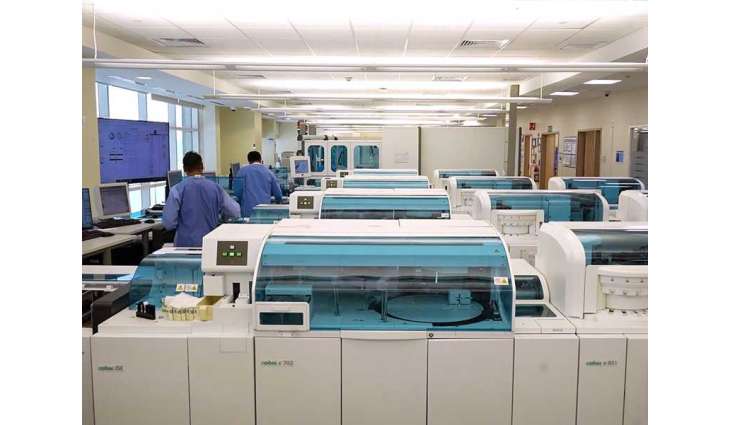
Hamad Medical Corporation (HMC) has adopted advanced digital systems to manage laboratory operations and to integrate analytical instruments with medical records electronically to deliver test results securely and immediately, reducing turnaround times while improving accuracy and quality.
This digital transformation aligns with Qatar National Vision 2030, which aims to build an integrated digital healthcare system driven by innovation, data and advanced technologies to support faster clinical decision-making, improve patient experience and enhance resource efficiency.
Digital transformation has become a cornerstone of healthcare development in Qatar, with expanding use of artificial intelligence and data analytics strengthening the sector's readiness for future challenges while raising the quality and efficiency of diagnostic services.
Laboratory Medicine and Pathology Chairman, Dr. Einas Al Kuwari, revealed that the department has achieved significant advances through qualitative achievements, record numbers, and large-scale digital transformations that reinforce the role of medical laboratories as a key pillar of Qatar's modern healthcare system.
In an interview with Qatar news Agency (QNA), she said HMC laboratories perform more than 20 million diagnostic tests annually, including approximately 153,000 genetic tests conducted by its Genetic Diagnostics Laboratory. These include testing for inherited disorders, genetic mutations linked to blood cancers and lymph nodes and other diseases, as well as premarital and newborn screenings.
She said the current phase of digital transformation has focused on improving operational efficiency, accelerating reporting of results and enhancing service quality.
As part of developing its precision medicine services, HMC has launched an in-house Clinical Whole Exome Sequencing (WES) for the first time, alongside new pharmacogenomics and thrombophilia testing services, expanding its ability to deliver personalised diagnosis and treatment, Dr. Al Kuwari highlighted.
In terms of blood transfusion services, Al Kuwari said Qatar has achieved self-sufficiency in blood and blood components through strong donor participation. HMC has also secured international accreditation for 11 sites and introduced the use of Low Titer O Whole Blood for critically injured trauma patients, improving survival rates through faster treatment of severe bleeding.
She added that HMC has introduced cryopreservation technology for rare blood group red blood cell units, allowing them to be stored for up to 30 years, strengthening preparedness for complex and rare clinical cases.
In the organ transplantation field, Qatar's only histocompatibility laboratory continues to support kidney and bone marrow transplant programmes using advanced technologies that reduce the risk of immune rejection and improve transplant outcomes. The laboratory also offers advanced tests, including cell-free DNA (cfDNA) and immune cell function testing, to improve post-transplant monitoring and support patients.
Al Kuwari said the Cell Therapy Laboratory continues to provide stem cell-based bone marrow transplant for adult cancer patients, with an increase of 19 percent compared to last year.
In clinical biochemistry, she said, HMC has introduced therapeutic drug monitoring, lipoprotein(a) testing to support early cardiovascular disease detection, expanded zinc and preeclampsia screening, and deployed advanced polymerase chain reaction (PCR) systems for respiratory virus testing.
The anatomical pathology laboratory receives more than 60,000 tissue samples annually, with cancer or suspected cancer cases accounting for around 13 percent of total cases. The growing volume reflects increasing demand for histopathology services and their central role in early cancer detection, supported by advanced diagnostic technologies that improve accuracy and speed clinical decision-making, enhancing the quality of care provided to patients.
Meanwhile, the microbiology department, she added, continues to strengthen efforts to combat antimicrobial resistance by developing national surveillance profiles, implementing the One Health approach, and expanding diagnostic supervision and infection prevention programmes that improve diagnostic efficiency, reduce costs, and enhance patient safety.
On medical education, Al Kuwari said the department organised Qatar's first pathology conference and was accredited as a venue for the Royal College of Pathologists Fellowship (FRCPath) examinations, postgraduate and fellowship training programmes, and strengthened academic collaboration with Qatar University.
Dr. Al Kuwari concluded that the achievements in HMC's laboratory medicine and pathology represent a strategic shift toward building a smart national laboratory system based on innovation, technology, scientific research, and skilled professionals, further enhancing healthcare quality and patient safety in Qatar.