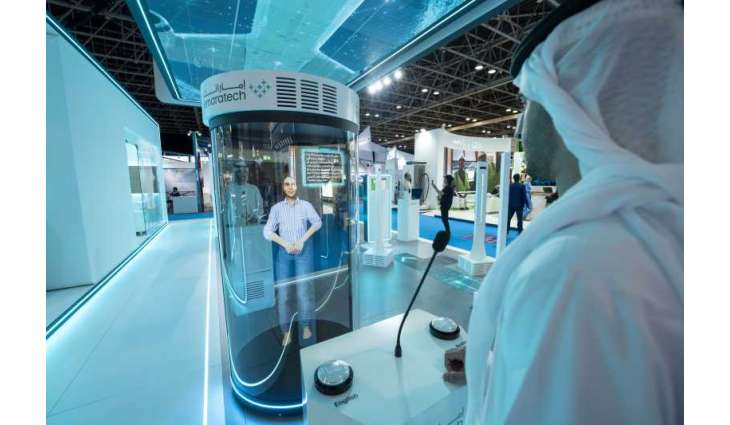
DUBAI, (Pakistan Point News - 02nd Jul, 2026) The 25th edition of the Airport Show 2026, to be held at the Dubai World Trade Centre from 12th to 14th October, will showcase the best biometric technologies and advanced innovations focused on the traveler.
This year’s edition will feature more than 150 exhibitors from over 30 countries, along with 120 hosted buyers, while the event is expected to attract more than 7,000 visitors from more than 30 countries over three days.
The exhibition is held under the patronage of H.H. Sheikh Ahmed bin Saeed Al Maktoum, President, Dubai Civil Aviation Authority (DCAA), Chairman of Dubai Airports, and Chairman and Chief Executive, Emirates Airline and Group.
The event will include accompanying conferences such as the Global Airport Leaders’ Forum (GALF), Airport Security middle East, Air Traffic Control (ATC) Forum, and Women in Aviation (WIA) Middle East Conference.
The Airport Show connects industry stakeholders to discover the latest innovations and contributes to the widespread adoption of advanced and emerging technologies that are reshaping the traveler journey and airport facilities in the Middle East, Africa, and South Asia.
Participants will be able to explore opportunities to strike deals with top decision-makers at airports that are allocating significant investments to develop and modernise their facilities to become global air transport hubs.
The widely popular platform offers exclusive meetings with decision-makers through the Hosted Buyers Programme, with the participation of officials representing leading airports worldwide to explore opportunities for supplying the technologies and products their airports require.
The Middle East region, which includes some of the world’s leading international travel hubs, is working to enhance the use of future biometric technologies to ensure a seamless airport experience for travelers, whose numbers in the region are expected to reach 240 million by 2026.
Airports in the region are benefiting from strong demand for long-haul flights, expansion in aviation hub capacity, and significant investments in upgrading and expanding airport infrastructure.
The International Air Transport Association (IATA) estimates that replacing manual verification processes with biometric identity confirmation can reduce processing times by up to 40%. For high-traffic airports, this translates into higher operational efficiency and greater capacity to accommodate travelers, who look forward to shorter queues, faster clearance procedures, and a smoother travel experience.
Dubai International Airport, which has been the world’s busiest airport for international passengers since 2014, has introduced the new AI-powered “Red Carpet” smart tunnel, capable of processing more than 10 travelers simultaneously.
The aviation sector in the United Arab Emirates has demonstrated resilience in recent times, with work progressing on schedule in the first phase of the Al Maktoum International Airport development project, in preparation for the start of operations in 2032.
The project, valued at several billion Dollars, has achieved key milestones across multiple implementation tracks, including runway infrastructure and initial structural foundations for passenger terminals and gates.
Majed Al Joker, Chief Operating Officer (COO) of Dubai Airports, remarked, “Dubai Airports is focused on delivering consistent, measurable improvements in how guests move through our terminals. Through continued investment in biometric and digital solutions, we are strengthening the efficiency of our operations while handling sustained growth.”
He added, “We remain committed to driving efficiency across every touchpoint through technology, collaboration, and operational discipline.”
The Al Maktoum International Airport will play a significant role in the future growth of Dubai’s aviation sector. The airport of the future will feature a highly interconnected ecosystem centreed around the traveler, with AI-powered analytics enabling personalised services and better management of passenger flows within terminal buildings.
In Abu Dhabi, Zayed International Airport has implemented a biometric solution based on facial recognition at five out of nine points along the passenger journey.
Currently, most countries in the Middle East use biometric data for passport purposes at airports and border crossings.
Emirates Airline, the world’s largest international carrier, was among the first airlines to use biometrics in 2017, deploying more than 200 biometric boarding cameras at Dubai International Airport as part of an AED85 million investment in facial recognition systems. This allows registered travelers to complete check-in, passport control, lounge access, and boarding simply by looking at the camera. Additionally, three UAE airports are now linked to a smartphone application that enables eligible travelers to complete all passport procedures before boarding, after a one-time registration.
Etihad Airways is currently testing AI-powered facial identity verification technology for both boarding and lounge access, while flydubai has begun integrating biometric options into its check-in systems and self-service kiosks. The Middle East region is rapidly working to implement unified and efficient biometric systems.
May Ismail, Event Manager at RX Middle East, organisers of the Airport Show, remarked, “Biometric technology is undoubtedly transforming airport operations, offering heightened security and passenger convenience. For airport operators, biometrics are a strategic answer to effectively and satisfactorily handle ever-rising passenger volumes. Biometric technology is transforming the entire airport operations and offering heightened security and passenger convenience.”
She added, “The Middle East countries, including the Arabian Gulf hubs, are competing to attract more connecting traffic and working to ensure faster passenger facilitation. Airports are seeing new travel innovations like biometrics as an opportunity to grow and expand rather than an obstacle and hindrance. Airports are rapidly and enthusiastically adopting biometrics to create a seamless, secure, and touchless passenger experience.”
According to a statement from the Airport Show organisers, the biometric technology market is expected to reach $150.58 billion by 2030, while the airport biometrics services market is projected to reach $276.56 billion by 2032.
Middle Eastern airports are among the global leaders in the use of biometrics, as travelers prefer the speed, convenience, and security these technologies provide. Countries are rapidly shifting from traditional technical solutions to advanced ones to ensure a seamless travel experience.
According to SITA, the global travel technology company, more than 43% of airports currently use biometric-enabled boarding systems, while more than half expect to implement integrated identity management solutions within the next three years.
By 2027, three-quarters of airports will use biometric technologies at several stages, including check-in, baggage drop, boarding, and border control.