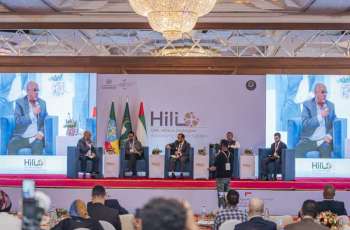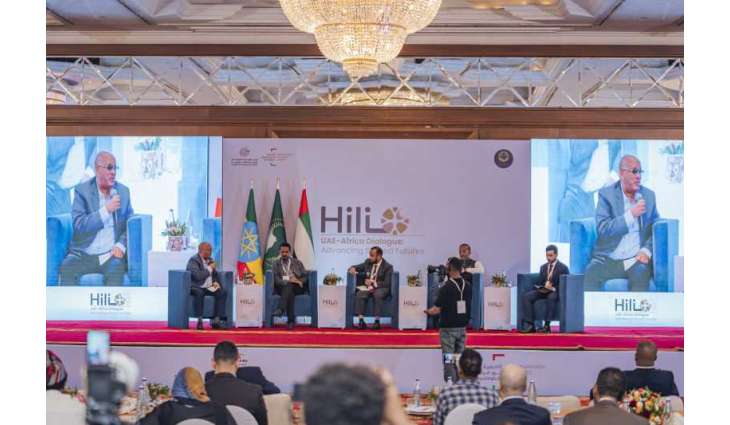
ADDIS ABABA, (Pakistan Point News - 28th Jun, 2026) The second edition of the Hili Regional Dialogue – Hili Africa Dialogue concluded in the Ethiopian capital, Addis Ababa. Organised by the Emirates Centre for Strategic Studies and Research (ECSSR) and the Anwar Gargash Diplomatic academy (AGDA), in cooperation with the Institute of Foreign Affairs – Ethiopia, the dialogue was held under the theme "UAE–Africa Dialogue: Towards Shared Future Horizons". It brought together officials, diplomats, experts, researchers and representatives of government, academic and research institutions from the UAE, Ethiopia and several African countries.
Held over two days, the dialogue marked a new milestone in the Hili Regional Dialogue series following its first edition in Latin America. It provided a broader strategic platform to examine the future of the UAE–Africa partnership amid rapid transformations in the global economy, supply chains, food and energy security, technology, critical minerals, and investment and development patterns.
Participants stressed that the dialogue extends beyond exploring opportunities for cooperation to building a shared understanding of how such opportunities can be translated into sustainable institutional partnerships based on mutual respect, shared interests and the inclusion of African perspectives in shaping cooperation priorities and pathways.
The dialogue opened with the Hili Youth Dialogue, providing a platform for young voices and researchers to discuss UAE–Africa relations, shared priorities and opportunities to translate research ideas into practical initiatives. The session also highlighted a joint study by the Emirates Centre for Strategic Studies and Research and the Institute of Foreign Affairs – Ethiopia on strengthening UAE–Africa relations and expanding cooperation across various sectors.
The opening ceremony featured remarks by Jafar Bedru, Executive Director of the Institute of Foreign Affairs – Ethiopia; Nickolay Mladenov, Director-General of the Anwar Gargash Diplomatic Academy; and Dr. Ebtesam Al Teneiji, Deputy Director-General of the Emirates Centre for Strategic Studies and Research. The keynote address was delivered by Ambassador Hadera Berhe, State Minister for Political and Economic Affairs at the Ministry of Foreign Affairs of the Federal Democratic Republic of Ethiopia.
Jafar Bedru said the UAE has become the Gulf's leading investor in Africa across ports, logistics, energy, food security and critical minerals. He noted that this engagement is built on a strong foundation of mutual trust while calling for a shift from announcements and short-term agreements to long-term institutional arrangements capable of withstanding changing circumstances and global transformations.
Nickolay Mladenov said Africa is not a distant region for the UAE or merely a source of natural resources, but a strategic partner offering ideas, growth, talent and diplomatic perspectives. He said the UAE can play an important role as a bridge connecting regions, capital and opportunities, technology and development, and ambitious visions with practical implementation. He stressed that UAE–Africa dialogue should be based on transparency, respect for sovereignty and the inclusion of African perspectives in shaping partnership priorities.
Dr. Ebtesam Al Teneiji said connectivity has become a strategic advantage in an increasingly fragmented world, measured not only by geography but also by the ability to build resilience and create long-term value. She added that the UAE–Africa partnership is evolving from traditional economic engagement towards long-term cooperation in advanced sectors including logistics, infrastructure, manufacturing, renewable energy, finance, agriculture and technology.
In his keynote address, Ambassador Hadera Berhe said the world is undergoing major geopolitical and economic transformations that require new partnerships and new ideas. He noted that Africa is emerging as an important driver of global growth thanks to its young population, resources and promising markets, adding that the Africa–UAE partnership represents a model of cooperation based on mutual respect, shared benefits and long-term commitment.
The first day also witnessed the signing of a Memorandum of Understanding between the Anwar Gargash Diplomatic Academy and the Institute of Foreign Affairs – Ethiopia, reflecting the two sides' commitment to strengthening institutional and research cooperation, developing sustainable channels for exchanging expertise, and supporting joint initiatives in diplomacy, strategic research and capacity building.
The second day featured a keynote session with Rashed Abdulla Al Shehhi, Chargé d'Affaires at the UAE Embassy in the Federal Democratic Republic of Ethiopia, and Ambassador Dr. Martin Kimani, former Permanent Representative of Kenya to the United Nations and President and Chief Executive Officer of The Africa Centre in the United States. The session examined transformations in the international system and the broader opportunities they present for Africa to redefine its position in the global economy and emerging value chains.
Four further sessions discussed economic transformation and new trade partnerships between the UAE and African countries, strengthening regional connectivity through infrastructure and port development, the role of advanced technologies and critical minerals in supporting future development, and opportunities for sustainable investment in agriculture and renewable energy.
Participants said UAE–Africa relations are gaining momentum, driven by a shared vision centred on sustainable development, stronger economic connectivity, knowledge exchange and investment in innovation and human capital. They also stressed the importance of continued dialogue among governments, think tanks and academic institutions to support knowledge-based policymaking.
In this context, Ambassador Alfred K'Ombudo, Senior Advisor to the President of Kenya on Trade Policy and Commercial Diplomacy, said attracting investment to Africa requires clear policies and a stable, predictable business environment that gives investors confidence to deploy capital. He added that the UAE can be an important partner in helping African countries attract global capital and invest in supply chains and logistics systems, enabling the continent to move from exporting raw commodities to producing higher value-added products.
Discussions also highlighted the importance of developing trade corridors and supply chains and expanding cooperation in the digital economy, artificial intelligence, food security and clean energy to support sustainable development and strengthen resilience in addressing shared global challenges.
Dr. Kayode Fayemi, former Nigerian Minister of Mines and Steel Development, said Africa no longer sees itself as a recipient of aid but as an active partner shaping its own development path in line with national priorities. He stressed the importance of strengthening governance, investing in human capital and directing policies to serve African citizens while achieving sustainable and inclusive development.
The sessions also addressed the importance of advanced technologies and critical minerals in shaping the economies of the future, as well as the role of sustainable investment in agriculture and renewable energy in strengthening food security, supporting the green transition, and expanding cooperation between the UAE and African countries in vital sectors.
The dialogue concluded by underscoring the importance of building on the outcomes of the second edition of Hili Regional Dialogue by strengthening institutional cooperation among partners and launching joint research and dialogue initiatives that contribute to deepening the strategic partnership between the UAE and African countries, while supporting sustainable development and shared prosperity.
Participants affirmed that the success of the dialogue in Addis Ababa has laid the foundation for a more sustainable path of cooperation between the UAE and Africa, based on knowledge, mutual respect, and the translation of ideas into practical initiatives that respond to the challenges and opportunities of the future.