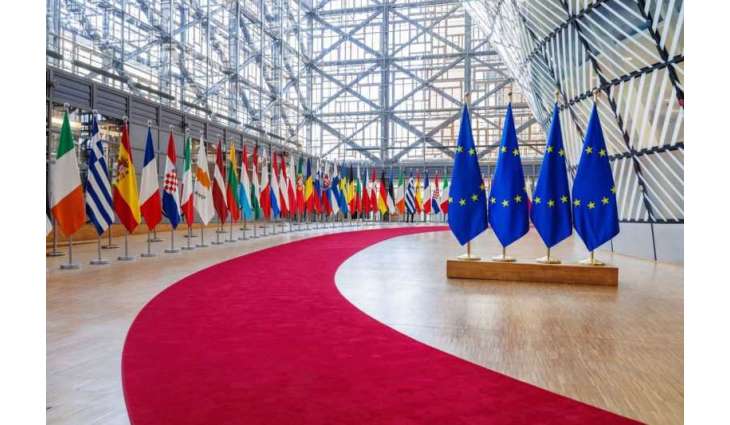
BRUSSELS, (Pakistan Point News - 19th Jun, 2026) European Union leaders stressed the importance of respecting freedom of navigation and maritime security in accordance with international law and the United Nations Convention on the Law of the Sea, affirming that any arrangements concerning the Strait of Hormuz should neither affect freedom of navigation nor alter its legal governance framework.
In conclusions issued at the end of their summit, held in Brussels on 18th and 19th June, the leaders reaffirmed their commitment to supporting security, stability and peace in the middle East, calling for enhanced diplomatic efforts to address regional crises in line with international law and United Nations resolutions.
The European Council welcomed the memorandum of understanding signed between the United States and Iran, describing it as an important opportunity to strengthen regional stability and ensure freedom of navigation and safe passage through the Strait of Hormuz.
The Council also praised ongoing diplomatic efforts to reach a peaceful settlement and commended the mediation roles played by Pakistan, Qatar and other regional partners.
On Iran, the European Union reiterated its opposition to Iran acquiring nuclear weapons, calling on Tehran to fully comply with its nuclear obligations, resume cooperation with the International Atomic Energy Agency, and halt activities the EU considers destabilising, including its ballistic missile programme.
The Council also urged the Iranian authorities to end violence and repression against their citizens and respect human rights and fundamental freedoms, while confirming that work would continue on additional restrictive measures against those responsible for violations.
Regarding the war in Gaza, European leaders expressed deep concern over the deteriorating humanitarian situation in Gaza and the West Bank, calling on Israel to allow the immediate and unhindered delivery of humanitarian aid, reopen border crossings, and enable humanitarian and UN organisations to carry out their work independently and impartially.
The European Union reaffirmed its support for a two-state solution as the basis for achieving a comprehensive, just and lasting peace, ensuring that two democratic states, Israel and Palestine, live side by side in peace and security within secure and internationally recognised borders.
The Council also called for the full implementation of relevant UN Security Council resolutions and for ending the conflict in Gaza through the disarmament of Hamas and other armed groups, the withdrawal of Israeli forces from the territory, and the deployment of a temporary international stabilisation force. The EU reiterated its opposition to any steps aimed at establishing permanent Israeli control over territory in the Gaza Strip.
In the West Bank, European leaders condemned continued settlement expansion and violence by settlers against Palestinian civilians, calling on the Israeli government to halt settlement activity, comply with international law and protect the Palestinian population.
On Lebanon, the European Council expressed concern over continued violations of the ceasefire, urging all parties to exercise restraint and work towards a lasting political solution that guarantees security and stability for both Lebanon and Israel.
The European Union condemned attacks carried out by Hezbollah against Israel and called for the group's complete disarmament. At the same time, it urged Israel to respect Lebanon's sovereignty and territorial integrity and to withdraw from Lebanese territory in accordance with UN Security Council Resolution 1701.
European leaders reaffirmed their continued support for Lebanese institutions, particularly the Lebanese Armed Forces, to enable the Lebanese state to extend its authority across all its territory, while maintaining humanitarian and economic assistance for those affected and displaced.
The European Council stressed the importance of continued coordination with regional and international partners to reduce tensions and promote security and stability in the Middle East, emphasising political and diplomatic solutions as the Primary means of resolving ongoing conflicts and achieving sustainable peace in the region.