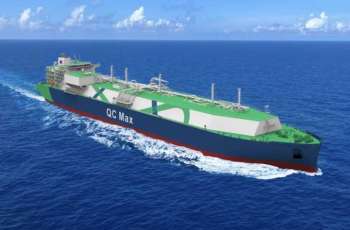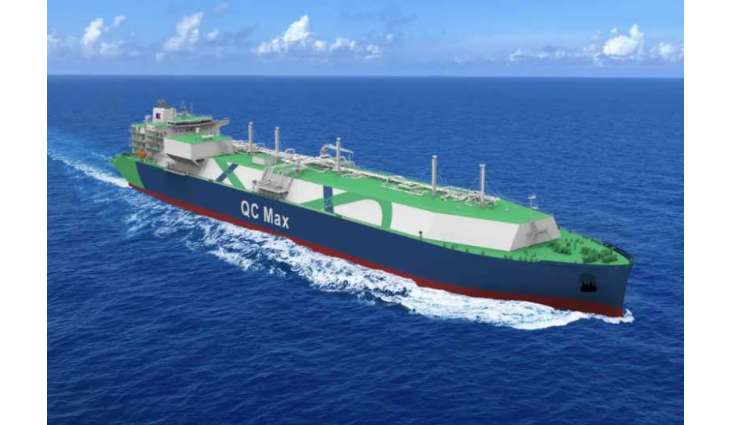
SHANGHAI, (Pakistan Point News - 12th Jun, 2026) Construction has commenced on an ultra-large liquefied natural gas (LNG) carrier with a capacity of 271,000 cubic metres, underscoring China's growing strength in high-end shipbuilding and global energy logistics.
The QC-Max class vessel, being built by Hudong-Zhonghua Shipbuilding (Group) Co., Ltd. under China State Shipbuilding Corporation (CSSC), is scheduled for delivery in 2028.
Measuring 344 metres in length, the vessel features an upgraded membrane containment system designed to maximise cargo capacity, enhance safety and improve environmental efficiency.
Compared with conventional 174,000-cubic-metre LNG carriers that currently dominate the market, the new vessel offers a 57 percent increase in cargo capacity while maintaining a daily boil-off rate of just 0.087 percent, significantly reducing transit losses, according to a representative of the shipyard.
Powered by a highly efficient dual-fuel propulsion system, the ship meets the International Maritime Organisation's Tier III emission standards and can dock at most major LNG terminals worldwide.
Built for a large-scale Qatari LNG project, the vessel highlights Hudong-Zhonghua's role as a leading shipbuilder. The company has secured orders for 36 vessels under the programme, including 24 of the ultra-large 271,000-cubic-metre model.
Often described as the "crown jewel" of the shipbuilding industry due to its extreme technical complexity and demanding supply-chain requirements, LNG carriers require exceptional manufacturing capabilities.
The shipyard currently holds nearly 60 pending orders for LNG vessels - the largest order backlog globally by cargo volume - with production schedules extending until 2030.
Driven by expanding production capacity and technological breakthroughs, China's global market share in LNG carrier construction has surpassed 30 percent, demonstrating its growing competitiveness in the high-end shipbuilding sector.