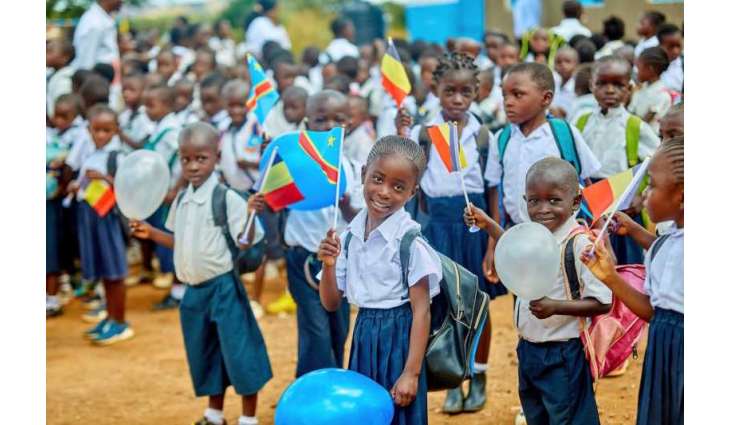
SHARJAH, (Pakistan Point News - 10th Jun, 2026) The Khalid bin Sultan Al Qasimi Humanitarian Foundation (KSQF) has announced a strategic partnership with UNICEF to launch a pioneering project in the Democratic Republic of the Congo (DRC). The initiative is dedicated to withdrawing children from the informal mining sector while establishing holistic, community-led systems to prevent future exploitation.
The announcement coincides with World Day Against Child Labour on 12th June, which highlights the urgent need for collective action to protect children from exploitation worldwide.
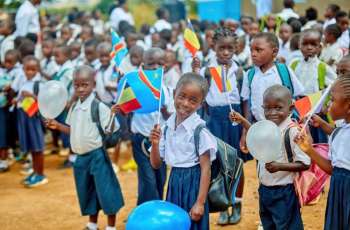
Across the DRC, millions of children face vulnerabilities in mining zones. Although the last DRC census was in 1984, the UN estimates 54 million children under the age of 18 live in the country. According to the 2023–2024 Demographic and Health Survey, one in ten Congolese children aged 5–17 (11%) worked in dangerous conditions. The most frequently reported dangerous condition was carrying heavy loads (7%). Overall, about 2 in 10 children (18%) were engaged in economic activities or household chores exceeding the thresholds defined for their age or had worked in dangerous conditions.
In the informal mining sector, the children are exposed daily to toxic dust, hazardous machinery, risk of collapse, and violence. Many earn as little as $1–$3 per day, income considered essential for household survival but which robs them of education and long-term development. International agencies classify mining-related child labour as one of the worst forms of child exploitation, given its immediate risks and long-term consequences, including chronic illness, disability, and intergenerational poverty.
Committed to advancing child welfare, KSQF is supporting a holistic initiative with UNICEF that addresses the root causes of child labour, including poverty and barriers to education. The programme combines direct support for children with assistance for families and strengthened protection systems across schools and communities. It is expected to directly benefit more than 200 children and 100 households, while strengthening the capacity of social workers, teachers and local institutions to prevent exploitation.
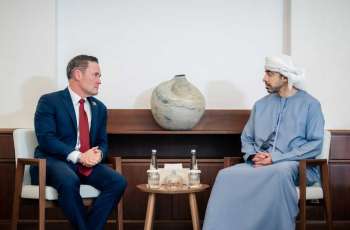
Lujan Mourad, Director of KSQF, said, “Child labour in the mining sector is one of the gravest humanitarian challenges of our time, stripping children of their health, safety, and future. This project with UNICEF is not simply an intervention - it is an urgent call to action to protect children, empower families, and build systems that meet the highest international standards of child protection. Sustainable development is not optional if we are to achieve quality of life and global development goals; it is the only way to ensure that children are in schools, not mines, and that communities can break free from the cycles of poverty and exploitation.”
Lujan further emphasised, “At KSQF, our mission is guided by the humanitarian legacy of the late Sheikh Khalid bin Sultan Al Qasimi, and by the vision and values of the Foundation’s chairperson Her Highness Sheikha Jawaher bint Mohammed Al Qasimi, who has made the welfare of children a priority. Our role is to turn that vision into lasting impact - safeguarding children, advocating for their rights, and investing in long-term, sustainable solutions that transform societies. This partnership with UNICEF embodies why KSQF was established: to step into critical gaps, bring global standards to the most urgent challenges, and stand firmly for a future where every child has the chance to reach their potential, uplift their community, and live with dignity.”
John AGBOR, Resident Representative, UNICEF, said, “Every child has the right to a safe childhood. In the Democratic Republic of the Congo, unfortunately we still have many children who work in informal mines instead of being in classrooms. With KSQF’s partnership, we will seek to consolidate these proven solutions that not only remove children from dangerous labour but also give them education, vocational skills, and the chance to grow in dignity and at the same time strengthen child protection systems alongside the government. This project is a powerful example of how global collaboration can drive sustainable change and bring us closer to achieving international development goals.”
The project builds on UNICEF’s TPS+ model, first piloted in 2023. This approach identifies vulnerable children, connects them to social services, and supports their families through financial and capacity-building interventions. The results speak volumes: in 2024 alone, 1,015 children were removed from mines - 599 re-enrolled in schools and 416 placed in vocational programmes. Crucially, none returned to mining.
KSQF’s strategic UNICEF Congolese partnership, implemented in Kambove Health Zone in Haut Katanga province, will directly support more than 200 children and go some way to removing them from the mining sector through strengthened protection services, expanded access to education and vocational pathways, and assistance for families to help reduce economic vulnerability.
At the same time, the programme will focus on empowering households, delivering monthly cash transfers to 100 families while providing financial literacy training and support for cooperative-led income-generating activities, to reduce dependency on the meagre earnings that children bring from mines. To ensure lasting change, the initiative will also drive advocacy and public awareness, raising community and national understanding of the dangers of child labour, engaging child reporters as youth advocates, and building partnerships with the private sector to strengthen accountability and embed young people’s protection within broader development frameworks.
The DRC supplies over 75% of the world’s cobalt, copper, and other minerals essential for the global energy transition, from electric vehicle batteries to renewable energy storage. Yet this global demand comes at a human cost borne by children in informal mines.
The programme is structured for long-term sustainability. Capacity-building for parasocial workers will assist with ongoing child protection, while household income-generation schemes prevent children from returning to mines. The insights gained will establish a scalable model of child protection, designed for replication across the DRC and in mining regions globally.