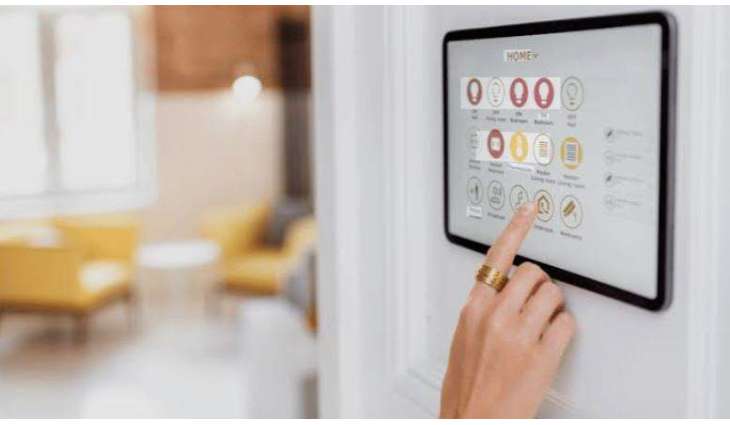
Automation and smart gadgets have transitioned from the periphery of invention to the core of daily life in a matter of years
By RANA ZOHAIB MANSOOR
Automation and smart gadgets have transitioned from the periphery of invention to the core of daily life in a matter of years. Once somewhat futuristic, technology today plays a crucial role in determining how society operates in everything from homes and workplaces to hospitals and industries. Convenience, efficiency, and even the nature of human labourare all being redefined by this quick change.
a smarter world at our fingertips
Wearable health monitors, voice-activated assistants, and smart home appliances are just a few examples of the growing number of smart products. To react to user behaviour, expedite tasks, and make autonomous judgements, they rely on artificial intelligence, sensors, and continuous internet connectivity. While a connected doorbell can recognise guests and send notifications to a homeowner's phone, a smart thermostat may modify temperatures depending on daily.
This intelligence is extended to more tasks through automation. Nowadays, domestic robots trim lawns and clean floors, while automated customer support systems respond to enquiries 24/7. In the workplace, machines may do repetitive activities with exceptional precision, while software can assess data in a matter of seconds.
Why automation is expanding so quickly
This technical advancement is being driven by a number of factors. AI developments have made it possible for gadgets to learn from their experiences, while the expansion of the Internet of Things has made it possible for billions of devices to rapidly communicate information. At the same time, smart technology is now more accessible than ever thanks to declining sensor and processing costs.
Customers have embraced gadgets that lessen daily work because they are more and more used to quick, easy fixes. In the meanwhile, companies are using automation to boost output, cut down on mistakes, and maintain their competitiveness in a world economy that is changing quickly.
Transforming the workplace
The workplace is experiencing one of the biggest effects of automation. Intelligent machines can perform repetitive, hazardous, or extremely precise jobs in industries including manufacturing, shipping, and healthcare. This change enables human workers to concentrate on positions requiring judgement, creativity, and interpersonal skills.
However, worries about job displacement are also raised by the growth of technology. Experts contend that although technology may displace certain jobs, it will also open up new ones, particularly in areas like digital infrastructure, data analysis, and AI research. Making sure employees have the skills required for this shifting environment is a challenge.
A connected future
Systems as a whole are becoming more intelligent than individual gadgets. With a single command, occupants of smart homes may manage appliances, security, and lights. Larger-scale smart city projects enhance urban living through intelligent energy grids, automated traffic signals, and real-time pollution monitoring.
These developments offer increased safety, decreased environmental impact, and increased efficiency. However, since increased connectivity might expose consumers to privacy threats and digital vulnerabilities, they also emphasise the necessity of robust cybersecurity measures.
Balancing progress with responsibility
Automation has enormous possibilities, but it also has significant obligations. Data protection, ethical AI use, and equitable access to technology must continue to be major concerns as society grows increasingly reliant on digital technologies. To ensure that these developments benefit everyone, policymakers, companies, and consumers all have a part to play.
Industries reshaped by intelligent automation
Although the effects of smart gadgets can be seen in households, some of the most significant developments are being driven by automation in business. Robotic systems enable factories to run continuously with little downtime. Predictive algorithms are used by automated supply chains to better manage inventories and forecast demand. AI-powered software helps physicians diagnose diseases, analyse medical pictures, and even forecast patient outcomes.
Productivity, accuracy, and operational efficiency all significantly increase as a result. Previously labour-intensive and time-consuming tasks can now be completed quickly and consistently with accuracy. Many companies see automation as a strategic need to be competitive in a globalised market, rather than an option.
The human factor: Jobs, skills and adaptation
Concerns regarding employment are unavoidably raised by the growth of automation. Certain traditional vocations are becoming obsolete as machines take over dangerous, monotonous, or highly complex duties. But when technology advances, new roles are frequently created while old ones are eliminated, as history demonstrates.
Future workers will need to be more flexible, digitally literate, and capable of critical thought. Jobs in data analytics, cybersecurity, robotics maintenance, AI development, and digital project management are expanding quickly. The crucial role of educating workers for a labour market moulded by intelligent machines now falls to governments and educational institutions.
Smart cities and the future of urban living
Automation is changing entire cities, not just individual residences and companies. Real-time congestion data is used by intelligent traffic systems to modify signal timing. Many parts of the world are testing automated trains and buses. Sensors are used in energy-efficient buildings to control heating and lighting, greatly lowering carbon emissions.
Cities that are more habitable and sustainable are made possible by these advancements. Among the main advantages are increased resource efficiency, decreased pollution, and enhanced public safety. However, to guard against interruptions or abuse, these systems also need a solid cybersecurity and digital infrastructure.
Privacy, security and ethical concerns
Concerns regarding security and privacy are becoming more pressing as devices collect enormous volumes of personal data. Wearable trackers capture private health data, automated systems retain intricate behavioural patterns, and smart home devices may listen in on conversations. If this data is handled improperly or compromised, there could be major risks.
The way AI systems make decisions also raises ethical questions. Automation affects many facets of daily life, from creating web content to calculating loan eligibility. Upholding accountability, justice, and transparency is crucial to preserving public confidence.
Global adoption and the digital divide
Smart technology is growing quickly, yet not everyone benefits equally from it. While rural or low-income populations may find it difficult to obtain or afford new technology, wealthier countries and urban areas typically adopt them more quickly. If left unchecked, the digital divide could lead to increased social and economic inequality.
To guarantee that every citizen can take part in the digital age, governments and groups are putting more emphasis on digital inclusion, extending internet access, and offering technology education.
A future defined by intelligent innovation
One of the biggest technological developments of the twenty-first century is the emergence of automation and smart devices. Human existence is about to become more intelligent, efficient, and connected as machines and digital systems grow more powerful. However, society must adopt these technologies responsibly, wisely, and inclusively for them to reach their full potential.
Conclusion
The world is changing at a rate never seen before because to automation and smart technology. They have an impact on almost every facet of contemporary life, from healthcare to urban planning, from industrial productivity to personal convenience. These technologies have great potential as they develop, but they also call for a balance between innovation and regulation, advancement and ethics. The way we utilise our machines intelligently and inclusively will determine the future, not simply how sophisticated they get.
This article is authored by RANA ZOHAIB MANSOOR with support of MUHAMMAD IBRAHIM IQBAL and HAFIZ ABDULLAH NADEEM of CUI Lahore under guidance of instructor AYESHA AZIZ